
The Pan Niger Delta Forum (PANDEF) has called on the Federal Government to increase the derivation allocation to oil-producing states from the current minimum of 13 per cent to 50 per cent, arguing that the existing arrangement has failed to adequately address decades of environmental degradation and underdevelopment in the Niger Delta.
The regional socio-political organisation also demanded the abolition of the onshore-offshore dichotomy in revenue allocation, insisting that communities affected by offshore oil exploration should not be excluded from the benefits associated with petroleum resources extracted from their surrounding environment.
The demands were contained in resolutions reached during a meeting of PANDEF’s Board of Trustees and National Executive Committee held in Abuja and virtually on Tuesday, October 27, 2026, as the organisation marked its 10th anniversary.
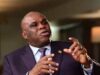
Speaking after the meeting, PANDEF National Chairman, Ambassador Godknows Igali, said the minimum 13 per cent derivation allocation had remained unchanged for more than two decades, despite the growing environmental, economic and social challenges confronting oil-producing communities.
He maintained that increasing the allocation to at least 50 per cent would provide oil-producing states with greater financial capacity to address longstanding development deficits, repair damaged infrastructure, tackle pollution and improve the living conditions of residents.
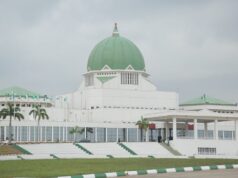
PANDEF called on the Federal Government, the Revenue Mobilisation, Allocation and Fiscal Commission (RMAFC) and the National Assembly to initiate the necessary constitutional and legislative measures to review the existing revenue-sharing arrangement.
The current minimum derivation allocation is provided for under Section 162(2) of the 1999 Constitution, as amended.
PANDEF seeks end to onshore-offshore dichotomy
Beyond the proposed increase in derivation, PANDEF urged the Federal Government and the National Assembly to resolve the longstanding controversy surrounding the onshore-offshore dichotomy in revenue allocation.
The organisation argued that oil and gas operations conducted offshore can have serious consequences for coastal communities, particularly those whose livelihoods depend on fishing and other marine-related activities.
According to the forum, oil spills and other incidents associated with offshore petroleum exploration can damage marine ecosystems, destroy fishing grounds and undermine the economic activities of communities, regardless of whether the resources are located on land or at sea.
It therefore called for a review of the existing arrangement to ensure that affected coastal populations receive fair consideration in the distribution of revenue derived from petroleum resources.
Niger Delta environmental crisis remains a concern
PANDEF also expressed concern over the environmental consequences of more than six decades of oil and gas exploration in the Niger Delta, calling for urgent intervention in heavily affected communities.
The organisation specifically identified Nembe Creek in Bayelsa State, Odidi in Delta State and Kula in Rivers State as areas requiring environmental remediation.
It further called for adequate, sustained and transparent funding for the Ogoni clean-up programme, while urging the Federal Government to establish a comprehensive framework for extending environmental restoration to other polluted communities across the region.
PANDEF maintained that environmental recovery should be treated as a central component of the Niger Delta’s development strategy, rather than as an isolated intervention.
The group also challenged presidential candidates preparing for the 2027 general elections to present practical, measurable and time-bound plans for cleaning up polluted communities and addressing the region’s environmental challenges.
It said such commitments should form part of a broader agenda for sustainable development, economic recovery and improved living standards.
Lagos-Calabar Coastal Highway, roads and seaports
On infrastructure, PANDEF insisted that the completion of the Lagos-Calabar Coastal Highway remained a priority for the Niger Delta, welcoming the Federal Government’s decision to retain the project’s original broad alignment.
The organisation said the proposed 750-kilometre highway could improve connectivity among coastal states, stimulate trade and create opportunities in the blue and marine economy.
It also called for the rehabilitation of the East-West Road and other deteriorating roads across the region, noting that poor transport infrastructure continues to constrain economic activities and regional integration.
PANDEF further urged the government to accelerate the development of seaports and other strategic infrastructure capable of supporting commerce, industrial growth and job creation across the South-South.
The forum said improving regional connectivity would help unlock the economic potential of the Niger Delta and strengthen its contribution to the national economy.
Calls for investment in modular refineries and agriculture
As part of efforts to diversify the regional economy, PANDEF advocated stronger support for modular refineries through appropriate financing, licensing arrangements, technical assistance and environmental compliance measures.
The organisation argued that properly regulated modular refineries could complement large-scale refining operations, support local businesses, create jobs and reduce Nigeria’s dependence on imported petroleum products.
It also called for a coordinated agricultural development programme involving the Federal Government and the six South-South state governments.
Priority areas identified by the forum included palm oil, rice, cassava, vegetables, horticultural products and other crops suited to the region’s ecological conditions.
PANDEF urged authorities to invest in improved seedlings, mechanisation, irrigation and water management, rural roads, storage facilities, agro-processing, affordable financing and agricultural extension services.
According to the group, developing agricultural value chains would strengthen food security, generate employment and reduce the region’s dependence on crude oil as its principal economic resource.
PANDEF proposes regional investment fund
The organisation also disclosed plans to explore the establishment of a market-based South-South investment fund designed to mobilise resources from individuals, businesses, institutions and other stakeholders.
The proposed fund would support investment in critical sectors, encourage enterprise development, improve regional connectivity and create employment opportunities.
PANDEF said it intended to engage private-sector operators and other relevant partners to develop a workable framework for the initiative.
Message ahead of the 2027 elections
With Nigeria preparing for the 2027 general elections, PANDEF urged residents of the South-South to exercise their civic responsibilities peacefully and vote according to their conscience.
The organisation called on voters to support candidates whose programmes, commitments and demonstrated capacity align with the aspirations of the region and can contribute to peace, progress and sustainable development.
It also appealed to indigenes of the Niger Delta holding public offices, particularly at the federal level, to demonstrate greater commitment to the region’s collective interests.
PANDEF reaffirmed its readiness to engage the Federal Government, state governments, traditional institutions, private-sector organisations and other stakeholders in pursuing peace, unity, security and development.
The proposed increase in derivation, if adopted, would represent a major change in Nigeria’s revenue-sharing arrangement. However, it would require the relevant authorities to undertake the necessary constitutional and legislative processes before it could be implemented.
For PANDEF, the demand forms part of a wider call for environmental justice, improved infrastructure and a development framework that delivers more tangible benefits to communities that have hosted oil and gas operations for decades.
#PANDEF #NigerDelta #OilRevenue #OilDerivation #GodknowsIgali #NigerianPolitics #EnvironmentalJustice #LagosCalabarCoastalHighway #SouthSouth #NigeriaNews #TrendsReporters