
Nigeria’s 36 state governors have rejected suggestions that state governments failed to properly account for funds received following the removal of the petrol subsidy.
The governors, under the platform of the Nigeria Governors’ Forum (NGF), said allegations that sub-national governments had not properly managed or accounted for subsidy-removal proceeds were unfounded.
Governors deny responsibility for accountability concerns
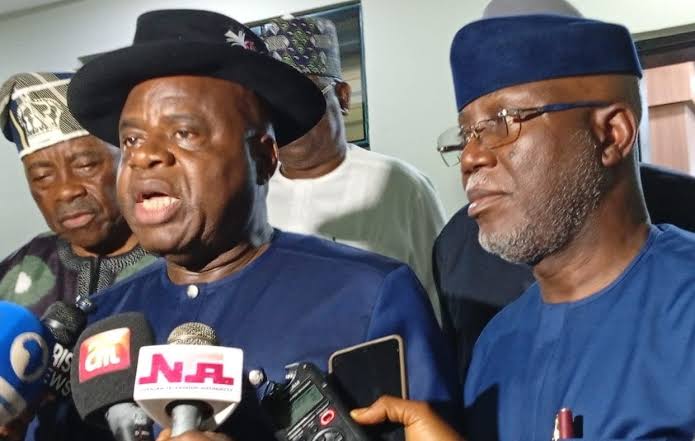
The issue came up after the governors’ third meeting at the NGF Secretariat in Abuja, which ended in the early hours of Thursday.
When asked whether state governments should accept responsibility for concerns over how subsidy-removal funds had been managed, Bayelsa State Governor Douye Diri rejected the suggestion.
“That cannot be true. That cannot be true. But we’ll leave that debate for another day.”
Diri spoke on behalf of the NGF Chairman, Kwara State Governor AbdulRahman AbdulRazaq, while presenting the outcome of the meeting.
Governors back cheaper transport through CNG
The governors also expressed support for the proposed National Affordable CNG Transit Programme (NACTP), which is designed to reduce transportation costs by increasing the use of compressed natural gas-powered vehicles.
Under the proposed programme, state governments would support vehicle conversions, CNG fleets and related infrastructure, while participating transport operators would commit to reducing passenger fares.
The governors said the initiative could help address the high cost of transportation, which they identified as a major contributor to rising prices of food and other essential goods.
‘Gas is cheaper than petrol’
Diri said state governments were prepared to work with the private sector to increase the number of CNG vehicles operating in the country.
According to him, the lower operating cost of gas compared with petrol could translate into cheaper transportation and eventually reduce pressure on household expenses.
The governors said the proposed programme has the potential to provide relief to ordinary Nigerians, although details concerning financing and implementation are still being worked out.
Why transportation costs matter
The governors argued that transportation affects virtually every part of the Nigerian economy.
When the cost of moving people and goods increases, businesses generally face higher operating expenses, while the cost of transporting agricultural produce and other commodities to markets can also rise.
The NGF therefore believes reducing transportation costs could have a wider impact on food prices and the cost of living.
States urged to explore trade opportunities
The governors also received a briefing from the Minister of Industry, Trade and Investment, Jumoke Oduwole, on opportunities for states to participate in CANEX Weekend 2026 and the Intra-African Trade Fair (IATF) 2027, both scheduled to take place in Lagos.
The forum said such platforms could help states showcase investment opportunities, promote local exports and tourism, and connect state-based MSMEs with investors and buyers across Africa and beyond.
The bigger issue: accountability
The governors’ rejection of responsibility adds another dimension to the continuing national debate over how Nigeria’s states and local governments have used increased allocations following the removal of the petrol subsidy.
While the governors maintain that they should not be blamed for alleged failures in accountability, calls for greater transparency over public finances remain important as Nigerians continue to deal with high living costs.
For citizens, the central question remains how additional public revenue is being translated into better infrastructure, cheaper transportation, improved services and tangible economic relief.
OnPointGist will continue to monitor developments around fuel subsidy reforms, state finances and the cost-of-living crisis in Nigeria.