
The outcome of the recent Osun State governorship election may provide an important indication of what Nigerians should expect as the country prepares for the 2027 general elections.
The August 15 poll was preceded by heightened political tension and violence, raising concerns that the election could degenerate into a major crisis. According to the Kimpact Development Initiative, about 73 election-related violent incidents were recorded before the poll, with 29 deaths reported. The police and the state government also put the number of politically motivated killings during the campaign period at at least 30.
The political crisis was further aggravated by the prolonged dispute over local government administration in the state. After a Federal High Court removed local government chairmen elected on the platform of the All Progressives Congress in 2022, fresh council elections were held in February 2025. However, the ousted APC officials later returned to the council secretariats, resulting in competing claims to office and repeated clashes.
The dispute also affected the handling of statutory allocations to the local governments. Billions of naira in federal allocations were initially withheld, while state authorities later alleged that the funds had been paid into accounts controlled by the APC council officials.
The political temperature rose further shortly before the governorship election when the Economic and Financial Crimes Commission froze an account belonging to the Osun State Government as part of an investigation into alleged financial irregularities. The restriction was subsequently lifted following intervention by President Bola Tinubu.
The eve of the election also witnessed a major influx of APC governors, ministers, federal lawmakers and other senior party figures into the state to campaign for the party’s candidate. Critics viewed the development as excessive federal involvement in a state election and said it contributed to an atmosphere of intimidation.
Despite the tension, Osun voters turned out to cast their ballots. There were, however, reports of ballot-box snatching, attacks at polling locations, vote-buying and voter interference. Some polling-unit results were cancelled following disruptions.
The deployment of the Bimodal Voter Accreditation System also came under scrutiny, with observers reporting delays and overcrowding at some voting centres.
Nevertheless, voter participation remained relatively strong. Of the 2,339,233 registered voters, 1,010,684 were accredited, translating to a turnout of 43.20 per cent. This was slightly higher than the 42.37 per cent recorded in the 2022 governorship election, although it remained below the turnout figures recorded in the 2014 and 2018 elections.
The Independent National Electoral Commission also received credit for the performance of its technology during the exercise. The BVAS functioned in most locations, while results were uploaded to the INEC Result Viewing portal without significant delay.
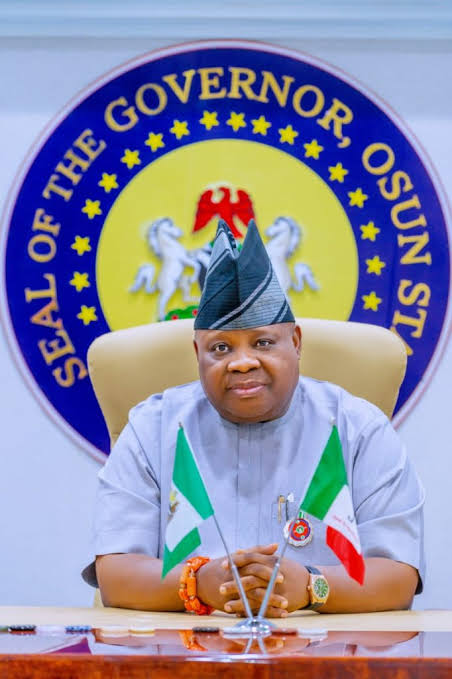
At the conclusion of the contest, Ademola Adeleke of the Accord Party secured victory in 19 of the state’s 30 local government areas with 511,067 votes, while the APC candidate, Bola Oyebamiji, won 11 local government areas with 444,815 votes.
The Osun experience demonstrates that Nigerian voters can still assert their democratic choices despite intense political pressure. However, the relatively lower stakes of a state election mean that the lessons from Osun cannot automatically be applied to a nationwide presidential and legislative election.
The 2027 elections will present a much greater test.
Political parties, electoral officials, security agencies and voters must therefore learn from the shortcomings witnessed in Osun. Elections should not become contests in which violence, intimidation, vote-buying or the deployment of federal influence determines the outcome.
Nigerians must also recognise the importance of protecting their votes. Accepting inducements from politicians should not prevent citizens from voting according to their convictions, while politicians who promote violence or undermine the electoral process should face appropriate sanctions.
For the 2027 elections to be credible, INEC must strengthen its technological infrastructure and ensure that BVAS and the IReV platform remain reliable throughout the voting and results-management process.
The judiciary also has an important role to play by resolving pre-election disputes promptly, independently and without political interference.
Ultimately, the Osun election has shown that credible elections remain possible in Nigeria. The bigger challenge is whether the country can reproduce that resilience and voter determination when the political stakes rise significantly in 2027.