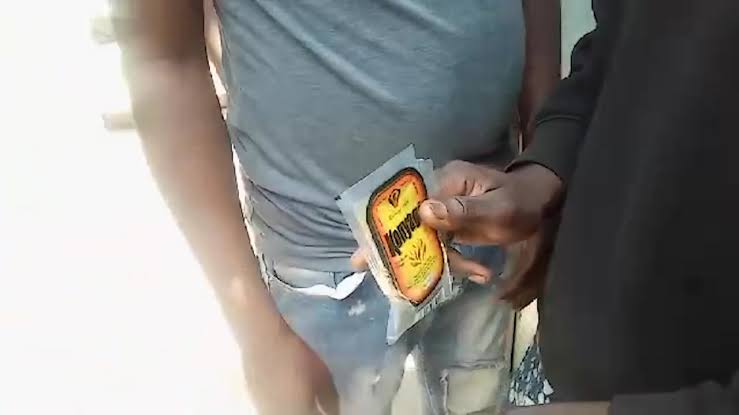
Six years of debate over the dangers of cheap alcoholic drinks have done little to stop their widespread sale in parts of Cross River State, raising fresh questions about the enforcement of Nigeria’s ban on sachet alcohol and small bottles containing less than 200 milliliters.
Despite the Federal Government’s prohibition, banned products reportedly remain openly available in markets, motor parks and roadside shops across the state, with some traders questioning whether authorities are genuinely committed to enforcing the policy.
The ban, which took full effect on January 1, 2026, covers alcoholic beverages packaged in sachets and small bottles below 200ml. It was introduced amid concerns that inexpensive, highly concentrated drinks were too easily accessible to minors and could encourage harmful alcohol consumption.
However, the situation in Cross River suggests that removing the products from circulation remains a major challenge.
At Ikom motor park, a driver identified as Ojong reportedly dismissed the ban as ineffective, arguing that many commercial drivers rely on inexpensive sachet alcohol and questioning how authorities could enforce a prohibition when some enforcement personnel were also consumers.
His remarks reflect the difficulties confronting regulators in communities where the products have become readily available and are regarded by some consumers as an affordable option.
In Calabar’s Watt Market, a trader identified as Iquo reportedly said she was unaware of the ban, although she acknowledged that enforcement agents had raided her stall on previous occasions.
She alleged that she had been able to recover seized goods after pleading with officials and giving them money. Her account raises concerns about possible corruption undermining enforcement efforts.
In Ogoja, another trader, Egbe Anderson, questioned the government’s commitment to the policy, pointing to the continued arrival of supply vehicles from commercial centres including Lagos, Port Harcourt, Aba and Onitsha.
He argued that new brands continued to appear in the market despite the prohibition, suggesting that enforcement focused on retailers would have limited impact if manufacturers and distributors continued supplying the products.
A traditional ruler in Okpoma, Ogamode Onah, expressed support for the ban, linking alcohol consumption among young people to concerns about road accidents, substance misuse and other social problems in local communities.
He urged enforcement authorities to take the policy seriously and ensure that prohibited drinks were removed from circulation.
The National Agency for Food and Drug Administration and Control (NAFDAC) has maintained that the prohibition is in force and that enforcement operations are targeting manufacturers, distributors and retailers. The agency has also warned that offenders risk having their products seized and facing regulatory sanctions or prosecution.
The agency’s position raises a central question for Cross River: why do prohibited products remain openly available despite nationwide enforcement efforts?
For the ban to achieve its public health objectives, enforcement must extend beyond market stalls to the entire supply chain, including manufacturers, transporters and distributors. Allegations of bribery also require proper investigation to establish whether misconduct is undermining the operation.
The continued availability of sachet alcohol highlights the gap between regulatory policy and implementation. Until enforcement becomes consistent and transparent, the government’s effort to restrict access to the products may struggle to deliver the intended results.
#SachetAlcoholBan #NAFDAC #CrossRiverState #PublicHealth #AlcoholControl #NigeriaNews #OnPointGist