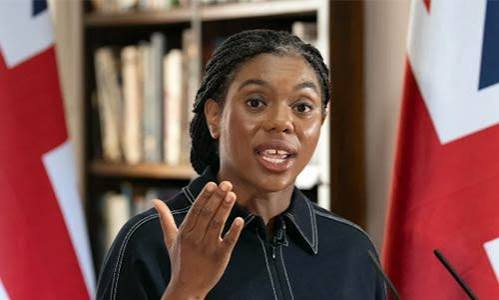
UK Conservative Party leader Kemi Badenoch has rejected calls for Britain to issue another formal apology for its role in the transatlantic slave trade, arguing that African rulers and merchants who participated in the trade should also be held accountable for their historical involvement.
Badenoch made the remarks amid renewed debate over Britain’s responsibility for slavery ahead of the Commonwealth Heads of Government Meeting scheduled to take place in Antigua and Barbuda.
Her comments followed British Prime Minister Andy Burnham’s indication that he was open to considering a formal apology for Britain’s involvement in the slave trade, although he ruled out direct financial compensation.
Reacting, Badenoch described a fresh apology as an unnecessary distraction, warning that it could open the door to further demands for reparations from Britain.
She argued that discussions about slavery should reflect the full historical picture, including the role played by African kingdoms, rulers and merchants who captured and sold people into slavery.
Badenoch questioned whether Caribbean countries seeking an apology from Britain would also demand similar acknowledgements from descendants of African leaders and traders who profited from the trade.
She maintained that slavery was an evil in which people from different continents and regions participated, adding that historical discussions should not focus exclusively on Britain’s role.
The Conservative leader also rejected calls for financial reparations or debt relief linked to slavery, insisting that present-day British taxpayers should not bear the financial burden of events that occurred generations before they were born.
Badenoch cited previous international debt-relief campaigns, including Jubilee 2000 and Make Poverty History, arguing that despite substantial debt cancellation, several beneficiary countries had accumulated further debts.
She further maintained that Britain had already acknowledged its historical involvement in the slave trade, pointing to former Prime Minister Tony Blair’s expression of sorrow and regret nearly two decades ago.
“The Commonwealth should be looking forward, not endlessly backwards,” Badenoch said, urging leaders to prioritize economic partnerships, trade and security cooperation.
Her position contrasts with calls from Caribbean leaders and reparations campaigners who argue that formal acknowledgement and concrete measures are needed to address the enduring consequences of slavery.
The debate has renewed questions about historical responsibility, the legacy of the transatlantic slave trade and whether former slave-trading nations should take further steps towards reparatory justice.
#KemiBadenoch #SlaveTrade #Reparations #Britain #AfricaHistory #Commonwealth #NigeriaNews #OnPointGist