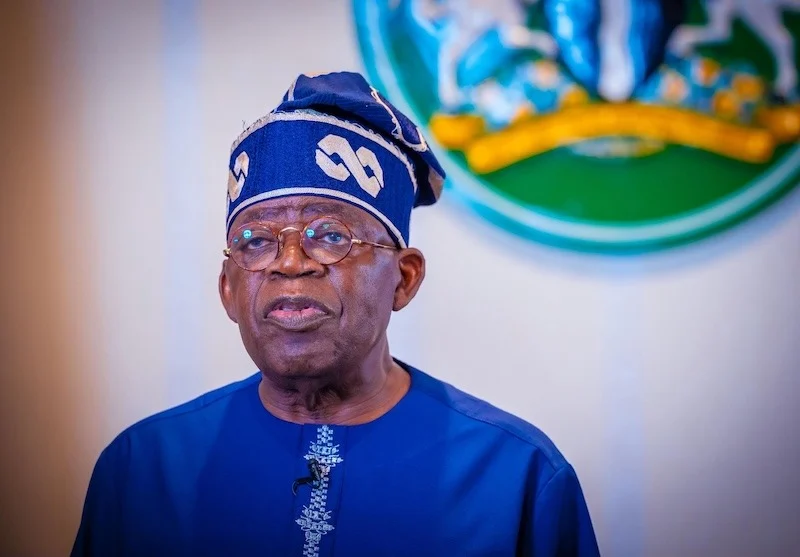
President Bola Tinubu has declared that Nigeria’s next economic priority is to transform the gains of ongoing reforms into lasting prosperity by strengthening local production, expanding trade and creating more jobs.
The President made the remarks at the opening of the 40th Lagos International Trade Fair, organised by the Lagos Chamber of Commerce and Industry (LCCI) at Tafawa Balewa Square, Lagos. He was represented at the event by the Minister of State for Industry, Senator John Enoh.
Tinubu said the Federal Government had made significant progress towards stabilising the economy but stressed that the next phase must focus on ensuring that businesses and ordinary Nigerians benefit from the improvements.
“The emergency is over. The foundation has been repaired. Our task now is to turn stability into prosperity, and enterprise is at the heart of that task,” he said.
Tinubu Highlights Economic Gains
The President cited improvements in Nigeria’s external reserves, inflation and economic growth as signs of progress under the administration’s economic reforms.
He said the country’s gross external reserves had risen to approximately $55.07 billion in October 2026, while net reserves exceeded $40 billion.
Tinubu also reported that inflation fell to 14.63 per cent in September 2026, while the economy recorded growth of 4.43 per cent in the second quarter.
He acknowledged the sacrifices Nigerians had made during the reform process, maintaining that the government’s priority was now to translate improving economic indicators into stronger businesses, increased employment and better opportunities.
Non-Oil Exports Take Centre Stage
Tinubu said Nigeria needed to reduce its dependence on crude oil by expanding non-oil exports and encouraging businesses to manufacture more goods locally.
He disclosed that the country’s non-oil exports exceeded $6.1 billion in 2025, while capital importation reached approximately $21 billion.
According to him, the African Continental Free Trade Area (AfCFTA) offers Nigerian businesses access to a continental market of about 1.4 billion people.
However, he stressed that local manufacturers must improve product quality, meet international standards and take advantage of available markets to compete across Africa and beyond.
He also emphasised the need to move away from exporting raw materials and importing finished goods, arguing that domestic processing and manufacturing would generate greater value, employment and economic opportunities.
Government Targets Stronger Industrial Growth
The President identified the National Industrial Policy as a framework for expanding manufacturing, strengthening local supply chains and converting Nigeria’s natural resources into finished products.
He said agro-processing, textiles and garments, automotive components, pharmaceuticals and creative industries were among the sectors with potential to drive production and exports.
Tinubu added that the Federal Ministry of Industry, Trade and Investment and its agencies supported more than 115,000 micro, small and medium-sized enterprises in 2025.
He pledged continued efforts to improve businesses’ access to finance, electricity and markets, noting that small businesses remained essential to job creation and inclusive economic growth.
He described industrial and trade policies as complementary, explaining that manufacturing creates goods for sale while trade provides access to customers and new markets.
Lagos Trade Fair Opens Doors to Global Opportunities
Tinubu welcomed exhibitors from more than 20 countries participating in the trade fair and encouraged businesses to use the event to establish partnerships, secure commercial agreements and attract investment.
He also announced that Nigeria would host the Intra-African Trade Fair for the first time in 2027, in partnership with the African Export-Import Bank (Afreximbank).
The development is expected to provide additional opportunities for Nigerian businesses to connect with buyers, investors and other enterprises across the continent.
The 40th Lagos International Trade Fair provides a platform for businesses to showcase products, explore partnerships and expand their reach, as the Federal Government seeks to make domestic production and international trade stronger drivers of Nigeria’s economic prosperity.
#Tinubu #LagosInternationalTradeFair #NigeriaEconomy #TradeAndInvestment #MadeInNigeria #NonOilExports #MSMEs #BusinessNews #OnPointGistNews24