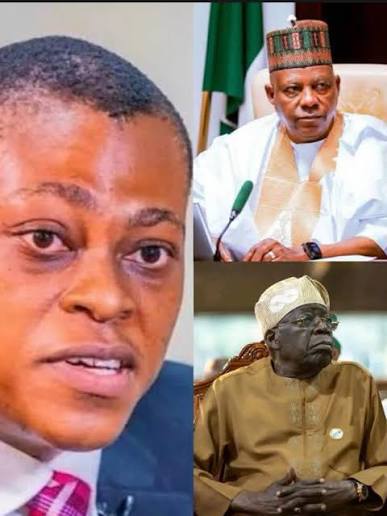
Arise Television presenter Rufai Oseni has offered his interpretation of why Senate President Godswill Akpabio was quick to reject being described as Nigeria’s acting President while President Bola Ahmed Tinubu and Vice President Kashim Shettima were away from the country.
Speaking on the Arise TV Morning Show, Oseni said the clarification followed comments by some of Akpabio’s political associates who had begun referring to him as acting President.
According to Oseni, Akpabio’s decision to distance himself from the title was intended to avoid potential complications surrounding the constitutional roles of the President, Vice President and National Assembly leadership.
Oseni argued that the episode also raised broader questions about the relationship between the executive and legislative arms of government.
Oseni questions National Assembly’s role
The broadcaster said Nigerians should not necessarily expect the National Assembly to aggressively challenge the executive when necessary.
He cited the legislature’s earlier endorsement of the declaration of a state of emergency in Rivers State as an example of what he regarded as the legislature’s approach to executive decisions.
Oseni questioned whether the National Assembly could effectively assert its constitutional independence if its leadership was unwilling to challenge the executive on contentious issues.
Akpabio had rejected the title
The comments followed reports that some political supporters had referred to Akpabio as acting President during Tinubu’s absence.
Akpabio subsequently clarified that he was not the acting President, distancing himself from the description.
The Nigerian Senate’s official profile confirms Akpabio as the current President of the Senate, while the Constitution provides for specific procedures concerning presidential absence and the transfer of executive authority.
Oseni’s comments therefore centre on his interpretation of the political implications of Akpabio’s decision, rather than a claim that the Senate President actually assumed the office of acting President.
The development comes amid renewed discussion about the constitutional balance between Nigeria’s executive and legislative branches of government.