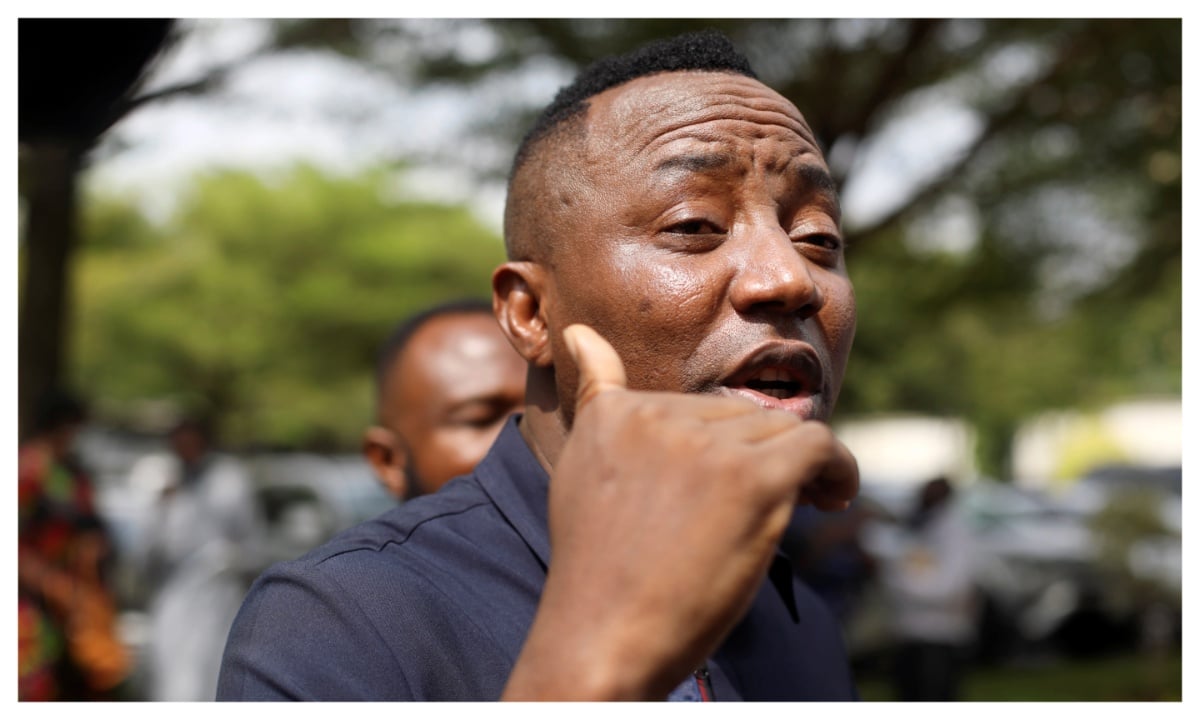
A fresh war of words has erupted between human rights activist Omoyele Sowore and the National Secretary of the All Progressives Congress (APC), Ajibola Basiru, over their university days and the circumstances surrounding Basiru’s admission to the University of Lagos (UNILAG).
Sowore, the presidential candidate of the African Action Congress (AAC), alleged that Basiru was expelled from the University of Ilorin (UNILORIN) in 1992 over student activism and later received assistance from fellow activists to pursue his Law degree at UNILAG.
The activist made the claim while responding to Basiru’s recent comments dismissing him as a comedian and questioning his chances of winning a presidential election.
Recounting their past, Sowore said he encountered Basiru alongside Kunle Adegoke, popularly known as K-Rad, who later became a Senior Advocate of Nigeria (SAN).
According to Sowore, the activists provided an enabling environment for the men to apply for admission and continue their education at UNILAG.
He maintained that their shared history in the struggle for democracy and justice should not be dismissed as comedy or skit-making.
However, Basiru rejected the account, describing Sowore’s claim as dishonest.
The APC national secretary insisted that he gained admission to study Law at UNILAG on merit, disclosing that he scored 310 in the Unified Tertiary Matriculation Examination (UTME).
Basiru further claimed that his score was the highest among applicants to the university’s Faculty of Law in the year he secured admission.
He denied having any relationship with Sowore before gaining admission and described the activist’s account of helping him as false.
The disagreement followed Basiru’s appearance on Channels Television’s Politics Today, where he questioned Sowore’s political relevance and described him as a comedian.
Basiru also argued that he did not believe Sowore had a realistic chance of winning the presidency, while accusing him of misleading young Nigerians about his revolutionary credentials.
The exchange has brought renewed attention to the pair’s alleged involvement in student activism during Nigeria’s military era, with both men offering sharply different accounts of their past.