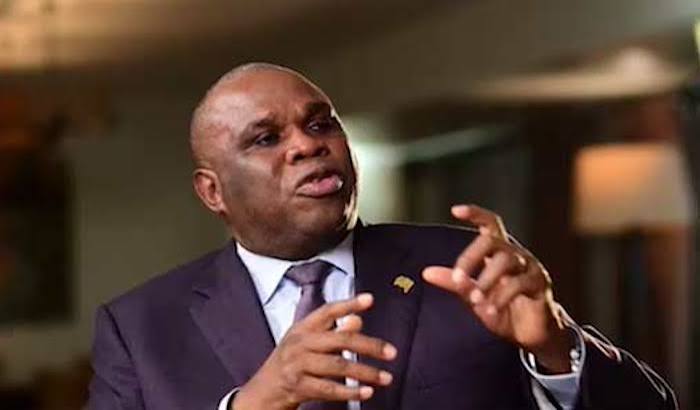
Former President and Chairman of the Board of Directors of the African Export-Import Bank (Afreximbank), Professor Benedict Oramah, has urged African countries to abandon the wholesale adoption of foreign economic models and develop home-grown strategies capable of driving sustainable growth and economic independence.
Oramah made the call while delivering the keynote address at the 20th AÉLEX Annual Lecture held at the Nigerian Institute of International Affairs in Lagos.
The lecture, themed “Beyond Survival: Global Shocks, the Information Age and Africa’s Opportunity to Leapfrog,” examined how African countries could turn global economic disruptions into opportunities for development.
He argued that Africa’s continued dependence on foreign financial institutions, external capital and international economic prescriptions had left many countries vulnerable to global shocks, debt pressures and fluctuations in commodity prices.
According to him, the continent must develop solutions that reflect its own economic realities, resources and development priorities rather than blindly follow approaches designed for other regions.
Oramah Calls for Greater Control of Africa’s Wealth
The former Afreximbank chief identified Africa’s foreign exchange reserves, estimated at between $350 billion and $500 billion, as a major resource that could support the continent’s economic transformation if more of it were channelled through African financial institutions.
He questioned the practice of keeping substantial African reserves in foreign banks while businesses and governments across the continent struggle to secure financing from those same institutions.
Oramah argued that African countries must strengthen their own banks and financial institutions instead of allowing the weaknesses of local systems to become reasons for continued dependence on foreign lenders.
He cited the experience of Asian countries, which established regional financial cooperation arrangements to protect their economies during periods of financial instability.
He urged African governments to embrace similar collective self-reliance and build stronger financial mechanisms capable of responding to economic emergencies without depending exclusively on external bailouts.
Africa Must Invest in Manufacturing and Technology
Oramah also warned that Africa risks losing out on opportunities in the rapidly expanding artificial intelligence industry if it continues to export raw materials without developing local processing and manufacturing capacity.
He said the continent possesses critical minerals needed for emerging technologies but must move beyond supplying raw materials to producing higher-value goods.
He further called for increased investment in electricity generation, technology parks and data centres to support the development of artificial intelligence and other advanced technologies.
According to him, Africa must not become merely a supplier of data for foreign technology companies but should develop its own AI models and technological capabilities.
He also highlighted the importance of the African Continental Free Trade Area and the Pan-African Payment and Settlement System in strengthening trade and financial transactions among African countries using their respective currencies.
African Banks Urged to Finance Development
The former Afreximbank president called on commercial banks to take a more active role in financing industrialization, infrastructure and businesses across the continent.
He maintained that African financial institutions should look beyond conventional banking activities and help create the capital needed to expand production, establish industries and generate employment.
Oramah pointed to the financing of major industrial projects, including the Dangote Refinery, as an example of how African-owned financial institutions could support large-scale economic development.
He urged African leaders to make strategic decisions based on the continent’s interests and work collectively to strengthen its position in the changing global economic order.
He maintained that Africa’s economic future would depend on its ability to mobilize its own resources, build stronger institutions, expand regional trade and develop solutions suited to its unique circumstances.
#BenedictOramah #Afreximbank #AfricanEconomy #EconomicIndependence #AfricaDevelopment #Manufacturing #ArtificialIntelligence #NigeriaBusiness #BusinessNews #OnPointGistNews24