

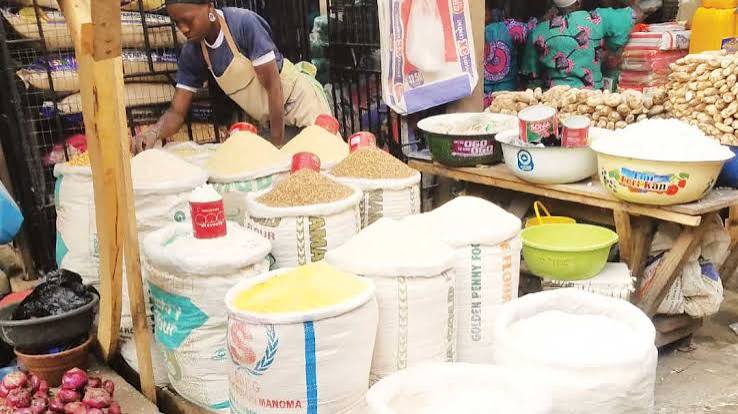
Food wholesalers across Nigeria are changing how they sell essential commodities, splitting large sacks and cartons into smaller quantities as rising prices and limited working capital make it increasingly difficult for small retailers to buy in bulk.
The adjustment is becoming more common in major food distribution markets, where warehouse operators are introducing half-bag, quarter-bag and split-carton sales to help neighbourhood shops remain stocked despite mounting financial pressure.
Traditionally, wholesalers required retailers to purchase complete 50-kilogram bags of rice, beans and garri, full cartons of noodles or 25-litre containers of vegetable oil. However, persistent price increases and reduced consumer purchasing power have made such purchases increasingly difficult for many small businesses.
Warehouse operators are now weighing and repackaging smaller portions, allowing retailers to spread their limited funds across several products rather than committing most of their capital to a single item.
Small Traders Struggle to Keep Their Shops Stocked
A bulk grain distributor, Alhaji Musa Danjuma, said selling smaller quantities had become necessary to keep goods moving and prevent stock from remaining unsold.
He explained that some retailers who previously purchased several full bags of rice could now afford only a few, forcing wholesalers to adjust their sales arrangements to accommodate buyers with limited funds.
The change has offered some relief to small shop owners and market traders, many of whom operate on narrow profit margins and depend on daily sales to replenish their inventories.
A provision store owner, Mrs Ngozi Okafor, said the option to purchase half-bags of beans and rice, alongside smaller quantities of packaged foods, had helped her maintain a wider range of products in her shop.
Without the arrangement, she explained, buying a single full bag of certain commodities could consume most of her available weekly capital, leaving little money to purchase other essential goods.
Smaller Wholesale Purchases Come With Extra Costs
Although the new arrangement is helping retailers manage their cash flow, it also creates additional work for warehouse operators.
Staff must weigh, repackage and seal smaller quantities, increasing labour and packaging expenses. There are also concerns about inaccurate measurements and possible disputes over the quantity supplied.
Some wholesale associations have reportedly introduced standardised digital scales at loading points to enable retailers to verify the weight of their purchases before making payment.
Consumer advocates have also cautioned that the additional handling costs could contribute to higher prices per unit for end-users, even when the arrangement helps prevent shortages in neighbourhood shops.
Half-Bag Orders Become a Major Part of Trade
Retail traders say the option to buy smaller quantities has helped some businesses remain operational at a time when expensive bank loans and reduced access to supplier credit are adding to their difficulties.
An agricultural economist, Dr Amina Yahaya, described the development as a market response to financial constraints, explaining that businesses often adjust the size of transactions when buyers have less money available.
A warehouse supervisor, Tunde Adeyemi, said half-bag purchases now account for nearly 40 per cent of his depot’s daily turnover, illustrating how significantly buying patterns have changed.
The shift reflects the pressure facing Nigeria’s informal retail sector, where many traders must balance rising wholesale prices with customers who can no longer afford to buy as much as they once did.
While breaking bulk is helping wholesalers retain customers and enabling small retailers to continue operating, it does not resolve the underlying affordability problem.
For many businesses and households, the wider challenge remains the same: keeping essential food items available and affordable as purchasing power continues to come under pressure.
#NigeriaEconomy #FoodPrices #Inflation #SmallBusinesses #MarketTraders #CostOfLiving #FoodSecurity #BusinessNews #OnPointGistNews24