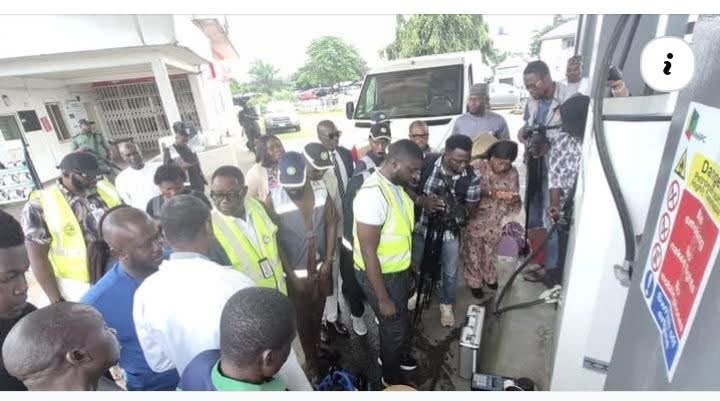
The Nigerian Midstream and Downstream Petroleum Regulatory Authority (NMDPRA) has shut down two filling stations in Port Harcourt, Rivers State, after discovering that they were dispensing less petroleum products than customers paid for.
The affected outlets are MRS Filling Station on Azikiwe Road and Stageoil Filling Station along Aba Road. The closures followed a surveillance and enforcement operation conducted by the regulatory agency on Thursday, October 8, 2026.
Speaking after the inspection, the NMDPRA Executive Director of Health, Safety, Environment and Community, Dr Mustapha Lamorde, said the exercise was designed to protect consumers from being short-changed by filling station operators.
According to Lamorde, officials assessed the quantity of fuel dispensed, the quality of petroleum products and compliance with safety requirements at the outlets.
The inspection covered petrol, diesel and kerosene, with samples collected for on-the-spot screening to establish whether the products met the required national standards.
Lamorde explained that the two affected stations were sealed immediately after under-dispensing was detected, adding that further regulatory action and possible sanctions would follow.
He also disclosed that another filling station inspected during the operation was found to be dispensing more fuel than indicated. Its operator was directed to suspend sales and recalibrate the affected pump before resuming operations.
Other outlets inspected during the exercise included the NNPC Mega Filling Station at Lagos Bus Stop in the old Port Harcourt Township, Reinoil, TotalEnergies and an NNPC station in Trans Amadi.
The NMDPRA official maintained that the inspections were part of the agency’s ongoing nationwide surveillance and not a one-off operation.
He assured Nigerians that the authority would continue monitoring filling stations and sanctioning operators found to be violating regulations.
Lamorde urged consumers to report suspected cases of inaccurate fuel dispensing and other infractions through the agency’s official communication channels.
The enforcement action comes amid continuing efforts by the regulator to ensure that motorists receive the correct quantity and quality of petroleum products for which they pay.