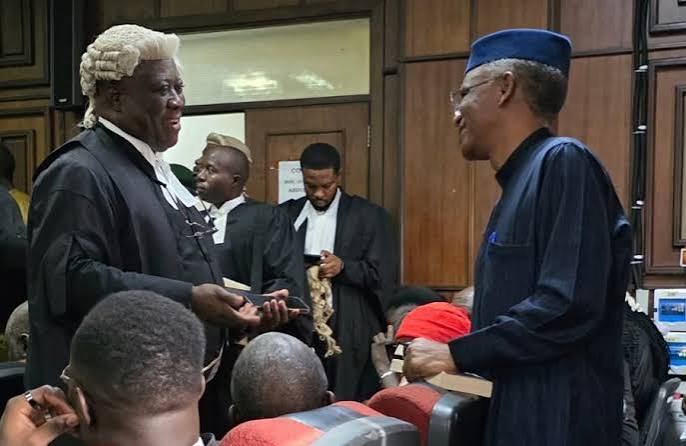
The Federal High Court in Abuja has dismissed a lawsuit filed by former Kaduna State Governor Nasir El-Rufai seeking to prevent the freezing of his bank accounts and seizure of his properties by anti-corruption and security agencies.
Justice Joyce Abdulmalik delivered the ruling on Thursday, 8 October 2026, holding that the case constituted an abuse of court process because El-Rufai had filed similar suits before different courts.
The case involved the Independent Corrupt Practices and Other Related Offences Commission (ICPC), the Economic and Financial Crimes Commission (EFCC), the Department of State Services (DSS) and the Attorney-General of the Federation.
According to reports by TheCable, the judge also described the suit as speculative and lacking merit. She subsequently struck out the names of the EFCC, DSS and Attorney-General of the Federation from the case, ruling that it disclosed no reasonable cause of action against them.
Why El-Rufai Went to Court
El-Rufai had approached the court seeking an order restraining the agencies from freezing his bank accounts or seizing his assets while the substantive matter was being determined.
The former governor argued that the severance benefits he received after completing his eight-year tenure from 2015 to 2023 could not reasonably be suspected to be proceeds of unlawful activities.
He also asked the court to declare that properties acquired with the benefits were legally obtained and belonged to him.
In addition, El-Rufai sought ₦1 billion in damages over what he described as the anticipated violation of his fundamental rights, including psychological distress, anxiety and reputational damage. He also requested ₦100 million in legal costs.
ICPC Opposed the Suit
The ICPC urged the court to dismiss the case, arguing that El-Rufai had filed three separate suits relating to the same ongoing investigation within 12 days.
The commission maintained that the overlapping cases, instituted before the Federal High Court and the FCT High Court, could result in conflicting judgments.
The Attorney-General of the Federation’s representative also argued that an interim forfeiture order was not a final forfeiture order and did not automatically amount to a violation of El-Rufai’s rights.
The court ultimately dismissed the suit, holding that law enforcement agencies could not be prevented from carrying out their statutory responsibilities through such proceedings.
The ruling concerns El-Rufai’s application to restrain the agencies; it should not, on its own, be interpreted as a final determination of any underlying criminal allegations.