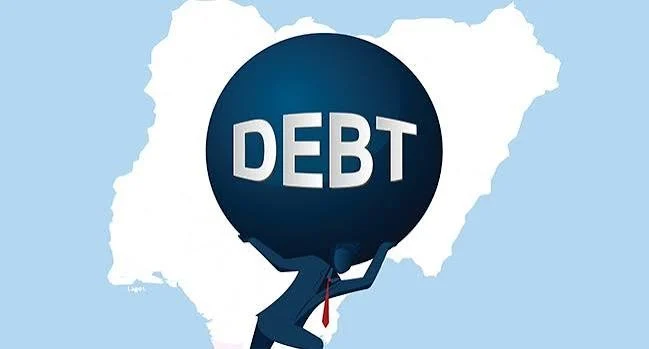
Nigeria’s Federal Government spent ₦7.7 trillion on debt interest payments in the first half of 2026, exceeding its total revenue of ₦6.2 trillion by ₦1.5 trillion, according to a World Bank report.
The figures mean interest payments consumed 124.2 per cent of the government’s revenue between January and June, highlighting the pressure debt obligations continue to place on public finances despite an increase in revenue collection.
The findings were contained in the World Bank’s October 2026 Nigeria Development Update, titled Beyond the Federal Purse: How Higher Revenues Shaped State Priorities.
According to the report, interest payments rose by ₦2.1 trillion, representing a 37.5 per cent increase from the ₦5.6 trillion recorded during the corresponding period in 2025. The World Bank attributed the rise largely to high domestic borrowing costs.
Meanwhile, federal revenue increased by 72.2 per cent, rising from ₦3.6 trillion in the first half of 2025 to ₦6.2 trillion in the same period of 2026. The improvement was supported by higher oil receipts, stronger corporate tax collections and increased independent revenues.
Despite the revenue growth, total federal expenditure climbed from ₦14.6 trillion to ₦16.1 trillion, representing a 10.3 per cent increase.
Personnel costs also rose from ₦3.7 trillion to ₦4.2 trillion following wage adjustments, adding to the government’s spending obligations.
The report further revealed a sharp decline in reported capital expenditure, which fell from one per cent of Gross Domestic Product in the first half of 2025 to 0.3 per cent in the corresponding period of 2026, amounting to approximately ₦700 billion.
Consequently, the Federal Government spent about 11 times more on interest payments than on reported capital projects during the six-month period.
Although the fiscal deficit narrowed from ₦11 trillion in the first half of 2025 to ₦9.9 trillion in the same period of 2026, the World Bank cautioned that the improvement should be treated carefully because of low reported capital spending.
The institution also estimated Nigeria’s public debt at approximately ₦177 trillion in 2025, equivalent to 40 per cent of GDP, compared with ₦67 trillion in 2021.
It recommended reducing reliance on expensive borrowing, prioritising concessional loans and extending debt repayment periods to ease pressure on government finances.
The World Bank also urged the government to strengthen revenue collection, improve budget planning and maintain fiscal discipline to prevent debt obligations from further limiting spending on infrastructure and essential public services.