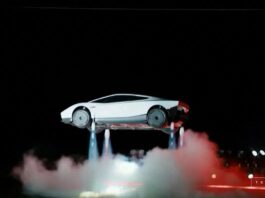
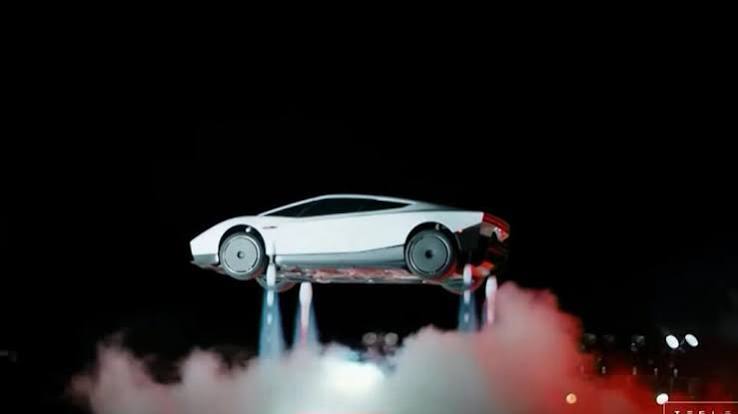
Tesla chief executive Elon Musk has unveiled a futuristic version of the company’s long-awaited Roadster electric sports car, featuring thrusters that allow it to perform aerial manoeuvres.
The vehicle was showcased during a livestreamed event at a SpaceX facility in Texas on Thursday, October 15, 2026, with footage of the demonstration drawing attention to the possibility of combining electric car technology with rocket engineering.
During the presentation, the vehicle launched from a ramp, performed an airborne manoeuvre and landed on its wheels. It also demonstrated the ability to travel upside down along a specially designed ramp using a suction system.
Musk described the development as evidence that flying cars were becoming a reality, although he cautioned that the technology’s success was not guaranteed.
How Tesla’s flying Roadster works
The vehicle was developed through collaboration between Tesla and SpaceX engineers. According to Musk, it uses ultra-high-pressure air tanks and thrusters to propel itself into the air.
The demonstration also highlighted the car’s extraordinary performance ambitions, with Tesla claiming acceleration from zero to 60 miles per hour in less than one second.
However, the vehicle is not a conventional flying car capable of transporting passengers through the air over long distances. Its aerial capabilities remain experimental, and questions persist over safety, practical use and regulatory approval.
Production targeted for 2028
Musk said production of the redesigned Roadster is expected to begin in 2028, more than a decade after the next-generation model was first announced in 2017.
The project has faced repeated delays, and the latest unveiling has not eliminated uncertainty about when customers will receive production vehicles.
Tesla has also not fully clarified the final specifications, pricing and regulatory status of all the proposed versions.
Questions remain over safety and practicality
Although the demonstration represents an ambitious engineering development, experts have questioned whether the technology could become practical for everyday transportation.
The vehicle’s ability to perform brief aerial manoeuvres does not mean it can operate like an aircraft, and its use on public roads or in the air would depend on relevant safety and regulatory requirements.
For now, the unveiling offers a glimpse into Musk’s vision of combining automotive and aerospace technology, while leaving important questions about commercial production and real-world use unanswered.
#ElonMusk #Tesla #FlyingCar #Roadster #SpaceX #Technology #Innovation #ElectricVehicles #WorldNews #OnPointGist