

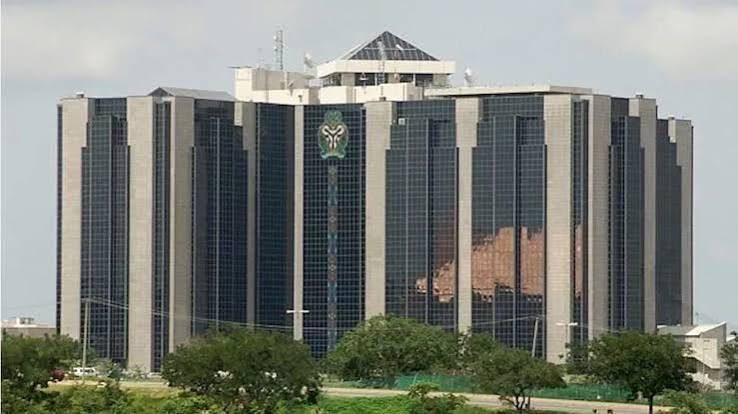
Nigerian banks have increased average prime lending rates across several key sectors despite successive interest rate cuts by the Central Bank of Nigeria (CBN), raising concerns about the cost of financing businesses and investment.
The development comes after the CBN reduced its Monetary Policy Rate (MPR) from 27.5 per cent in September 2025 to 26.5 per cent in February 2026, before implementing a further cut of 3.5 percentage points to 23 per cent in September 2026.
The reductions had raised expectations that commercial banks would lower borrowing costs for businesses and households. However, an analysis of the CBN’s published interest rate schedules for August 2025 and October 2026 showed that average prime lending rates increased in eight of 11 economic sectors examined.
Agriculture and construction face higher borrowing costs
Agriculture, forestry and fishing recorded one of the steepest increases, with average prime lending rates rising from 23.44 per cent to 24.77 per cent.
Construction rates climbed from 25.25 per cent to 26.40 per cent, while manufacturing lending rates increased from 23.79 per cent to 24.36 per cent.
Other sectors affected included government, real estate, education, healthcare, and finance and insurance.
However, average maximum lending rates declined across 10 sectors, falling from 33.78 per cent to 32.58 per cent. This suggests that the impact of monetary easing has been uneven, with some borrowers benefiting from lower quoted rates while others continue to face expensive credit.
Why are loan rates still high?
Financial analysts attributed the divergence to factors beyond the CBN’s benchmark rate, including banks’ funding costs, liquidity conditions, operating expenses, credit risks and individual pricing decisions.
Tunde Abioye, Head of Equity Research at Quest Merchant Bank, said the figures did not necessarily indicate a breakdown in monetary policy transmission, but rather a delayed and uneven response to the easing cycle.
Nnamdi Nwizu, co-founder of Comercio Partners, similarly noted that lending-rate changes varied across banks. His analysis found that, among 174 comparable bank-sector prime lending rate observations across seven identified sectors, 65 recorded reductions, 79 remained unchanged and 30 increased.
Analysts also cautioned that the September 2026 policy-rate cut was relatively recent, meaning its full impact might not yet have been reflected in commercial lending rates.
Depositors also feel the impact
While some borrowing rates remain elevated, returns offered to bank depositors have declined.
Average savings deposit rates fell from 7.81 per cent in August 2025 to 6.61 per cent in October 2026. Average time-deposit rates also dropped from 14.52 per cent to 12.28 per cent over the same period.
The trend highlights the uneven effects of changing monetary conditions on both borrowers and savers.
Implications for the Nigerian economy
Analysts warned that persistently expensive credit could discourage businesses from expanding, purchasing equipment or financing working capital.
Manufacturers and farmers may face higher costs for raw materials and inventory, while real estate developers could delay projects because of financing pressures.
If borrowing costs remain high, the consequences could include weaker private investment, slower job creation and reduced productive capacity, potentially complicating efforts to sustain lower inflation.
Although the CBN’s rate cuts have created expectations of cheaper credit, the latest figures suggest that businesses may have to wait longer before the benefits become fully apparent.
#NigeriaEconomy #CBN #InterestRates #BankingSector #BusinessNews #Agriculture #Manufacturing #OnPointGist