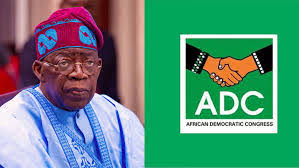
The African Democratic Congress Presidential Campaign Council (ADC-PCC) has criticised the All Progressives Congress Presidential Campaign Council (APC-PCC) over its defence of President Bola Tinubu’s electricity reforms, insisting that policy announcements and financial interventions cannot replace reliable power supply.
The exchange followed the APC-PCC’s declaration that efforts to fix Nigeria’s troubled electricity sector were ongoing, with the ruling party citing reforms, infrastructure projects and measures to address outstanding debts in the power industry.
However, the ADC-PCC, through its Director of Strategic Communication, Phrank Shaibu, argued that Nigerians continued to endure unreliable electricity despite the government’s explanations.
“The APC should spare Nigerians the spectacle of celebrating paperwork while homes and businesses remain in darkness,” the campaign council said.
It maintained that households and businesses were still spending heavily on generators and other alternative sources of electricity, while struggling with rising energy costs.
APC Defends Tinubu’s 2023 Electricity Pledge
The APC-PCC spokesperson, Dele Alake, said public assessments of Tinubu’s electricity promise should consider his full statement during the 2023 election campaign.
Tinubu had pledged to address Nigeria’s electricity challenges and end estimated billing, adding that voters should not re-elect him in 2027 if he failed to deliver, unless he provided adequate reasons for falling short.
Alake argued that the administration had taken steps towards fulfilling the commitment and that its performance should be assessed against progress in electricity supply, metering, infrastructure and market stability.
He cited the Electricity Act 2023, which allows states to participate in electricity generation, transmission and distribution, as a significant reform.
According to the APC-PCC, states including Lagos, Enugu, Abia, Ekiti, Oyo, Kaduna and Niger have begun establishing regulatory structures to develop their electricity markets and attract private investment.
The council also said the administration had introduced a Presidential Metering Initiative to address a shortfall of more than seven million meters, with over 1.5 million customers reportedly metered under the programme.
APC Cites N4 Trillion Bond Programme, Grid Projects
The ruling party’s campaign council further defended the government’s efforts to address more than ₦6 trillion in legacy debts accumulated across the power sector between 2015 and 2025.
It said a ₦4 trillion bond programme had been established to settle verified debts owed to 21 electricity generation companies and gas suppliers, adding that the first two tranches had raised more than ₦1.2 trillion.
The APC-PCC argued that settling these obligations would help improve confidence in the electricity market and encourage companies to invest in upgrading their facilities.
It also pointed to planned transmission upgrades, including the construction of new substations, improvements to existing facilities and proposals to modernise the Osogbo Grid Control Centre.
The council maintained that electricity infrastructure projects require time to implement because of equipment procurement and construction timelines.
It added that tariff reforms were intended to improve the financial position of electricity distribution companies while maintaining protections for low-income consumers.
ADC Questions Benefits of Tariff System
The ADC-PCC rejected the suggestion that the measures cited by the ruling party were sufficient evidence that Nigerians were receiving better electricity supply.
It criticised the electricity band system, arguing that consumers were being charged different rates without receiving dependable service in return.
The opposition campaign council cited Band A tariffs of approximately ₦209.50 per kilowatt-hour in many areas, before value-added tax, as an example of the financial pressure facing consumers.
It argued that electricity bills had become increasingly difficult for households and businesses to manage, particularly when supply remained unreliable.
The ADC-PCC also demanded clarification on the Federal Government’s reported plan to end electricity subsidies from 2027, questioning how the decision might affect households and businesses already struggling with energy expenses.
It proposed working with state governments and regulators to replace the existing band arrangement with what it described as a fairer and more affordable system that would hold electricity providers accountable for the service delivered.
‘Paying Old Debts Is Not Building New Power’
The opposition campaign council also challenged the government’s use of the bond programme as evidence of progress, arguing that settling old debts was different from investing in new electricity generation capacity.
It alleged that the administration had not built new generation infrastructure of its own to significantly expand Nigeria’s power capacity.
The ADC-PCC further raised concerns about taxation on electricity and the five per cent surcharge applicable to certain fossil fuels, including petrol and diesel, under the Nigeria Tax Act.
It argued that additional charges could place further pressure on households and businesses already paying heavily for energy.
The disagreement has intensified the political debate over Tinubu’s 2023 promise, with the APC-PCC insisting that reforms and projects are laying the foundation for improvements, while the ADC-PCC says Nigerians need measurable results rather than announcements.
Ultimately, the debate centres on whether ongoing reforms will translate into more reliable electricity, lower costs and improved conditions for homes and businesses ahead of the 2027 general election.
#Tinubu #ADC #APC #NigeriaPowerSector #ElectricityCrisis #PowerSupply #NigeriaPolitics #2027Elections #OnPointGist