
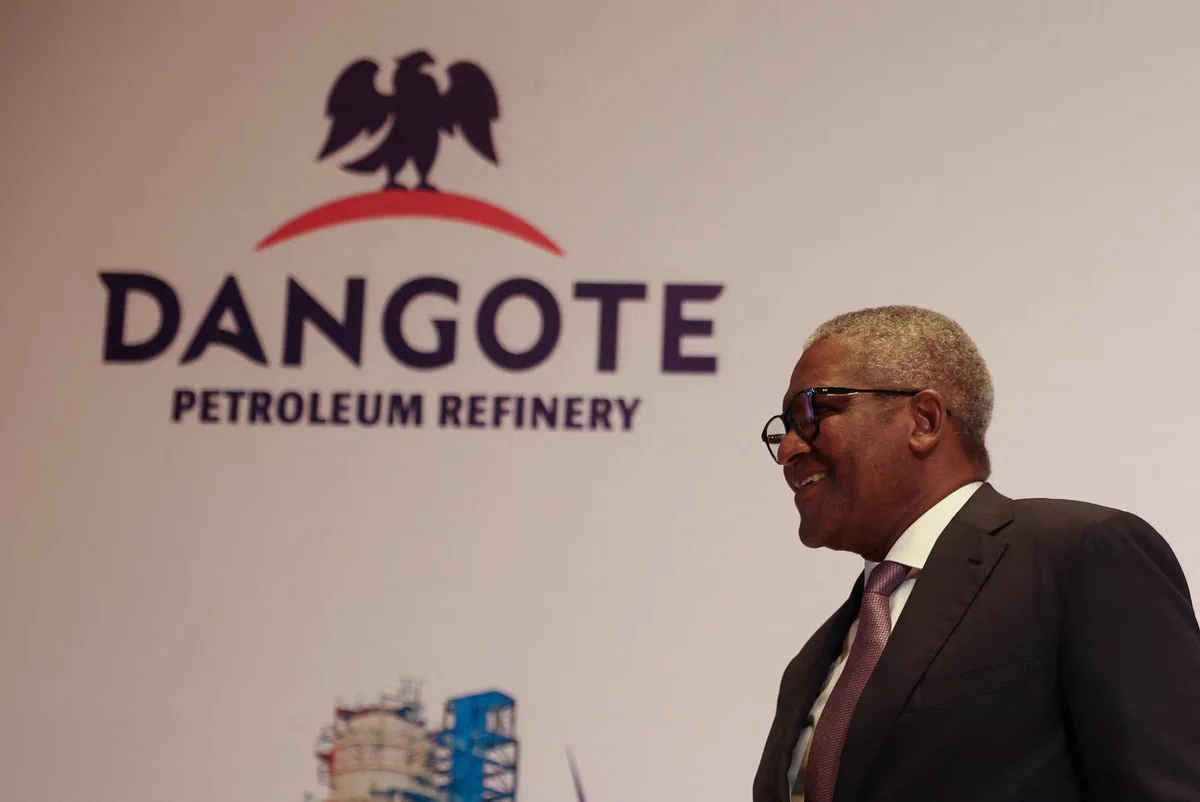
Dangote Industries is in discussions with the Kenyan government over plans to develop a 1,000-megawatt liquefied natural gas power plant alongside its proposed refinery and petrochemical complex in Lamu.
The proposed facility is expected to help address Kenya’s electricity supply gap while providing power for the planned industrial development around the Lamu project.
The power plant was initially conceived at a smaller capacity, with earlier plans providing for about 500MW to meet the refinery’s own electricity requirements. However, the Kenyan government is now pushing for the capacity to be doubled to 1,000MW, with the additional electricity potentially supplied to the national grid and nearby industrial facilities.
The proposal is part of a broader plan to establish an integrated energy and industrial hub in the coastal region.
Kenya’s economic advisers have indicated that the country could purchase excess electricity generated by the plant because of its existing power deficit.
David Ndii, who heads President William Ruto’s economic advisory team, said the proposed expansion would allow the plant to serve not only the refinery but also the planned Lamu Special Economic Zone and the petrochemical facilities expected to be developed alongside it.
He noted that the availability of relatively cheap gas-fired electricity could help support industrial activity in the zone and reduce the cost of providing power to businesses operating there.
The proposed plant would use natural gas, with Tanzania emerging as a potential source of fuel for the project. Tanzania has significant offshore gas reserves that could provide a long-term supply for power generation in coastal Kenya.
The gas could potentially be transported through a pipeline or delivered as LNG by tanker to a receiving facility at Lamu, although the final arrangement has yet to be determined.
A successful gas supply agreement between Kenya and Tanzania will therefore be an important requirement before the power project can move forward.
Kenya has been looking for ways to strengthen its electricity supply because of growing demand and limited reserve capacity. The country has also relied heavily on renewable sources such as hydro, wind and solar, which can be affected by weather conditions.
A larger gas-fired plant would provide a more stable source of electricity that could complement those renewable sources and strengthen the reliability of the national power system.
Kenya’s Energy Principal Secretary, Alex Wachira, has said the government would provide the necessary approvals for a captive power facility to operate the refinery.
He also indicated that Kenya would be able to absorb additional electricity produced by the plant because the country remains energy deficient.
The proposed 1,000MW facility would consequently have significance beyond Dangote’s refinery operations. If completed, it could become one of the largest gas-to-power projects in East Africa and create a new commercial route for Tanzanian natural gas.
For Dangote, the project forms part of the group’s expanding industrial ambitions outside Nigeria.
The billionaire businessman has been pursuing plans for a major refinery in Lamu that is expected to have a refining capacity of about 700,000 barrels per day. The proposed refinery is designed to supply petroleum products to Kenya and other markets across East and Central Africa.
Kenya and other East African countries have also been offered an opportunity to take an equity stake in the refinery project, with the Kenyan government considering an investment in the venture.
The refinery and power plant would benefit from shared infrastructure at the Lamu site, including port facilities and electricity transmission infrastructure. Such integration could reduce the cost of developing the projects separately.
The Lamu development is also connected to the wider Lamu Port-South Sudan-Ethiopia Transport corridor, commonly known as LAPSSET, which is intended to improve trade and transport links between Kenya and neighbouring countries.
Despite the scale of the proposed power project, several issues still need to be resolved before construction can begin.
These include the final agreement on the supply of gas from Tanzania, the terms of a power purchase agreement and the environmental approvals required for the expanded generation capacity.
The financing structure for the wider refinery project must also be settled before a final investment decision can be made.
The proposed power plant is therefore still at the negotiation and planning stage, rather than an operational project.
If the discussions are successfully concluded, however, the 1,000MW facility could provide a major boost to Kenya’s electricity supply while giving Tanzania a significant new market for its natural gas.
For Dangote Industries, the development would also deepen the company’s presence in East Africa and broaden its business beyond the refinery and manufacturing operations it already operates in Nigeria and other African markets.
The next stage of discussions is expected to focus on the technical, commercial and regulatory arrangements required to bring the power project to the construction phase.