










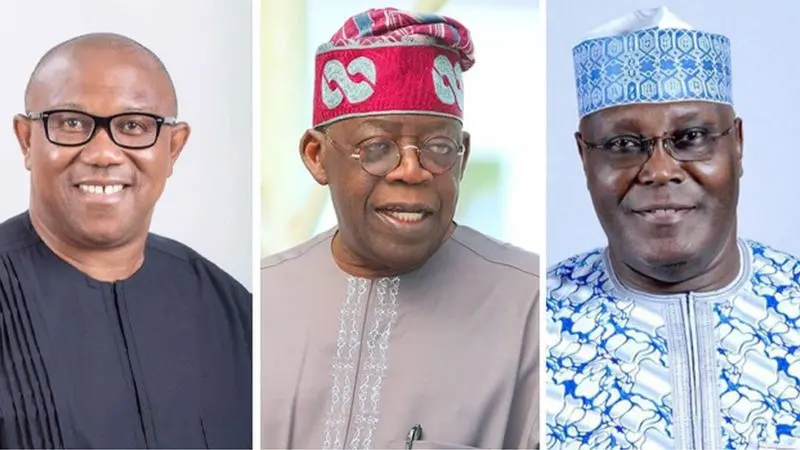
Nigeria’s opposition leaders are gathering in Abuja again as preparations for the 2027 presidential election intensify, but the meeting comes with a familiar question: can the country’s opposition parties move beyond individual ambitions and build a coalition capable of challenging the ruling All Progressives Congress?
The latest gathering follows the Ibadan Declaration of April 2026, which was presented as an important attempt to bring opposition figures together around a common political objective. But the difficulty has always been turning broad agreement into a workable political alliance.
The opposition landscape remains crowded with prominent politicians who have presidential ambitions, each convinced that his own political platform offers the best route to rescuing Nigeria.
That creates a fundamental problem. A coalition can only succeed if its members are prepared to compromise, particularly on the question of who eventually becomes its presidential candidate.
The struggle for a common candidate
The opposition parties face a choice between presenting multiple candidates and risking the division of anti-government votes, or negotiating around a single candidate who can unite the different political interests.
The second option may offer a stronger electoral strategy, but it requires politicians to sacrifice personal ambitions for a broader objective.
That is easier said than done.
Nigeria’s political history is filled with examples of opposition alliances that generated considerable excitement but failed to survive disagreements over leadership, candidate selection, power-sharing and control of party structures.
The 2027 contest could therefore become a test of whether the current opposition leaders have learnt from those failures.
Beyond personalities
A successful opposition coalition cannot be built solely around opposition to President Bola Tinubu.
The parties must provide Nigerians with a convincing alternative vision for the country.
That means addressing the issues that dominate everyday life: the cost of living, unemployment, insecurity, electricity, healthcare, education and the state of the economy.
Voters will also want to know how the proposed policies will be financed and implemented.
A coalition that simply promises to remove the incumbent government without presenting a credible programme for governing Nigeria may struggle to convince an electorate that is increasingly demanding practical solutions.
Tinubu’s advantage
President Tinubu enters the 2027 contest with the advantages of incumbency, the machinery of the governing party and access to a broad political network.
His administration is also expected to campaign heavily on its economic reforms, infrastructure projects and other policy initiatives.
The opposition therefore faces a difficult task. It must not only unite its political forces but also persuade voters that its alternative is more credible than the direction being offered by the APC.
This makes the question of unity particularly important.
If prominent opposition figures contest separately, the governing party could benefit from a divided electorate. But if they agree on a common platform and candidate, the 2027 contest could become significantly more competitive.
The danger of another failed alliance
The Abuja meeting is therefore more than another gathering of political leaders.
It is an opportunity to determine whether the opposition can transform months of discussions, declarations and negotiations into an electoral strategy.
The challenge will be managing competing interests without allowing disagreements over ambition and personal influence to destroy the broader project.
A coalition requires trust, discipline and a willingness to compromise. It also requires clear rules for selecting candidates and sharing political responsibilities.
Without these, another opposition alliance could collapse before Nigerians have the opportunity to decide whether it deserves their votes.
What Nigerians should expect
The opposition leaders now have an important choice.
They can continue pursuing separate political ambitions and hope that one of their individual platforms eventually emerges as the strongest challenger to Tinubu.
Or they can negotiate a genuine alliance built around a single presidential candidate, a common manifesto and a clearly defined programme for governing the country.
The second option may require painful compromises, but it could give the opposition a much stronger chance of presenting itself as a credible alternative in 2027.
Ultimately, Nigerians will judge the opposition not by the number of meetings it holds or the strength of its political rhetoric, but by whether it can demonstrate unity, offer workable solutions and convince voters that it is ready to govern.
The Abuja gathering may therefore be another step towards a historic opposition alliance or another reminder of why Nigeria’s opposition has repeatedly struggled to convert public dissatisfaction with the government into electoral victory.