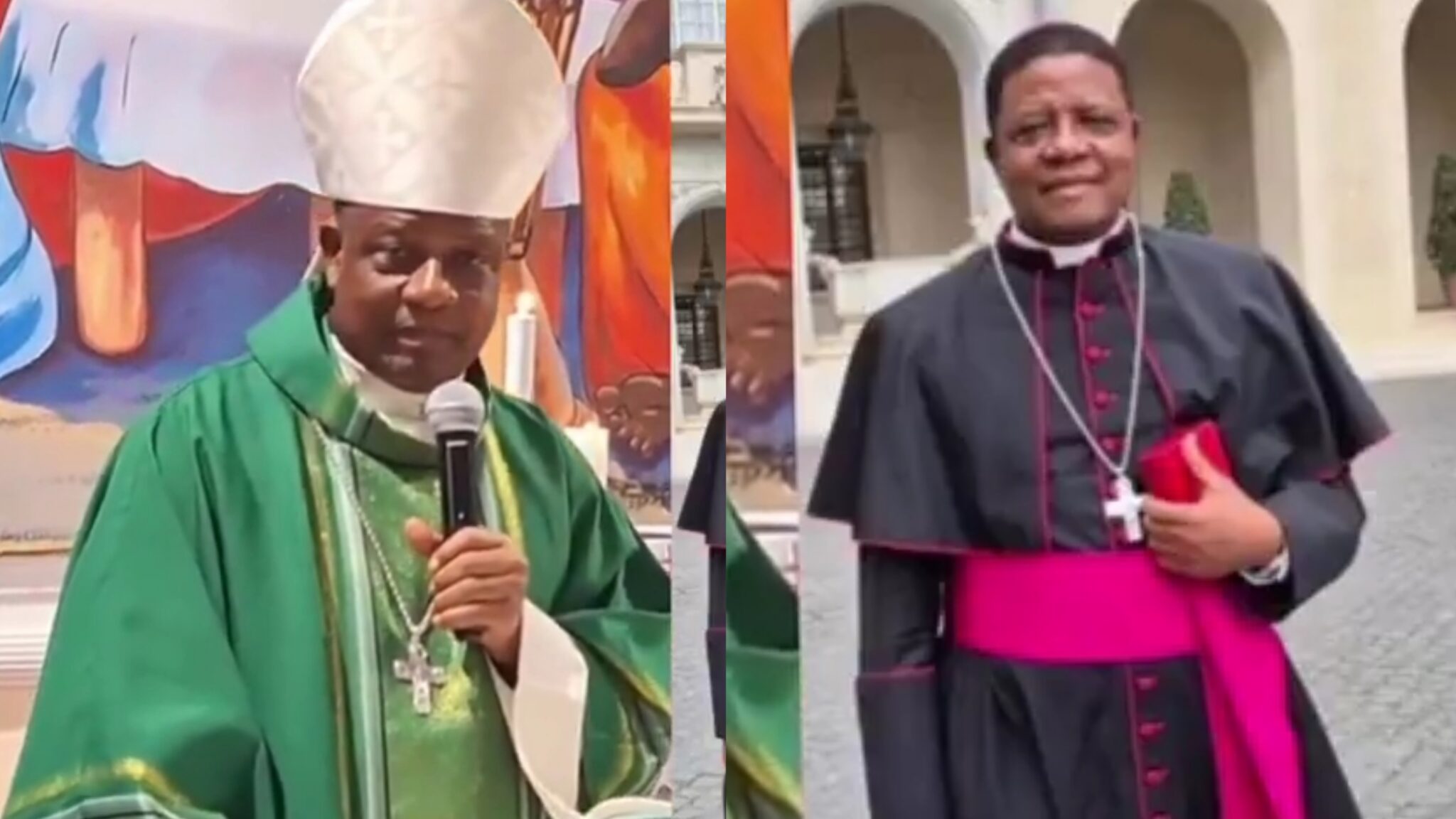
The Catholic Bishop of Nsukka Diocese, Most Rev. Godfrey Onah, has expressed concern over alleged discriminatory banking restrictions affecting Nigerians living in Italy, claiming that their nationality or country of birth could prevent them from accessing certain financial services.
The cleric shared his concerns in a video that has circulated on social media, recounting his personal experience at the Vatican Bank and highlighting difficulties Nigerians allegedly face when attempting to open accounts with Postepay, an Italian payment service.
According to Onah, some Nigerians seeking to open Postepay accounts have reportedly encountered restrictions that he claimed were specifically directed at them.
He expressed frustration over the situation, suggesting that being Nigerian had become an additional obstacle for citizens living abroad.
“Sometimes for us Nigerians, the very fact that you are a Nigerian is a problem, complicates life for you,” the bishop said.
Bishop Recounts Experience at Vatican Bank
Onah also narrated an incident during a visit to the Vatican Bank, where he said he was asked to obtain special authorisation before withdrawing money from his account.
According to the cleric, the incident occurred two days before he made the disclosure. He explained that he had exceeded the permitted withdrawal limit and was informed that approval from the administration or secretariat was required before he could access the funds.
The bishop said the requirement surprised him because he had not encountered a similar restriction during previous visits.
He recalled that a priest accompanying him sought clarification from the bank, asking whether the rule applied to everyone or only to bishops.
Onah said the response he received was unexpected, claiming that the restriction was connected to the country in which a customer was born.
Onah Alleges Nigerians Are Being Specifically Targeted
The bishop argued that the reported restrictions raised questions about how Nigerians are treated by financial institutions outside their home country.
He claimed that Nigerians could face limitations on the amount of money they are permitted to withdraw, even when the funds belong to them.
Onah further suggested that such restrictions could affect Nigerians regardless of their professional or religious standing, noting that even his position as a Catholic bishop did not appear to exempt him from the requirement.
However, the allegations regarding nationality-based banking restrictions have not been independently verified, and the reports did not include an official response from the financial institutions concerned.
Concerns Over the Treatment of Nigerians Abroad
The bishop’s remarks have drawn attention to the challenges Nigerians may encounter while living and working overseas, particularly when accessing financial services.
His account has also renewed discussions about discrimination, the treatment of foreign nationals and the importance of ensuring that banking policies are applied fairly and transparently.
Onah maintained that the reported experience was troubling, arguing that Nigerians should not face additional difficulties simply because of their country of origin.
His comments have added to wider conversations about the experiences of Nigerians in the diaspora and the need to address concerns about their treatment in foreign countries.