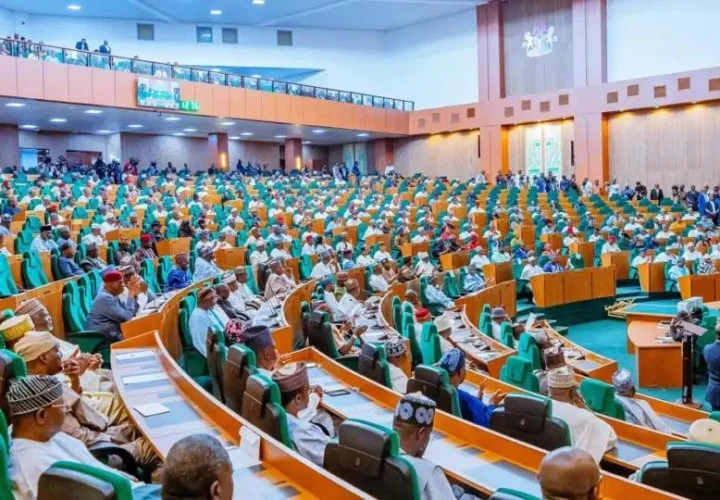
The House of Representatives has advanced a bill seeking to establish a National Authority for Renewable Energy (NARE) as part of efforts to expand electricity access and accelerate the development of clean energy across Nigeria.
The proposed agency is contained in the Electricity Act (Amendment) Bill, 2025, sponsored by Afam Victor Ogene, Chairman of the House Committee on Renewable Energy and representative of Ogbaru Federal Constituency.
The bill passed its second reading on Wednesday, 14 October 2026, and was referred to the relevant House committee for further legislative consideration.
If established, NARE would become the principal institution responsible for coordinating and promoting renewable energy development, taking over relevant functions currently handled by the Nigerian Electricity Regulatory Commission (NERC), the Rural Electrification Agency (REA) and the Rural Electrification Fund (REF).
Leading the debate on the proposal, Ogene argued that bringing these responsibilities under one institution would improve coordination, speed up rural electrification and attract investment into local manufacturing.
He also highlighted the importance of mini-grids and off-grid electricity systems in reaching communities that remain underserved by the national power network.
“We must embrace decentralised and renewable energy solutions to reach communities faster,” Ogene said.
40% of Rural Electrification Fund proposed for new agency
One of the bill’s major provisions is a proposal to allocate 40 per cent of the annual funds of the Rural Electrification Fund to NARE to finance renewable energy projects.
The proposed authority would also work with existing agencies to harmonise policies and improve the implementation of renewable energy programmes.
Supporters of the legislation believe the arrangement could widen access to electricity, encourage domestic manufacturing and create employment opportunities in the renewable energy industry.
However, the proposal has not yet become law. It must undergo further legislative scrutiny and complete the required lawmaking process before the authority can be established.
The outcome of the legislative process could shape Nigeria’s approach to renewable energy development and efforts to provide electricity to communities beyond the reach of the national grid.