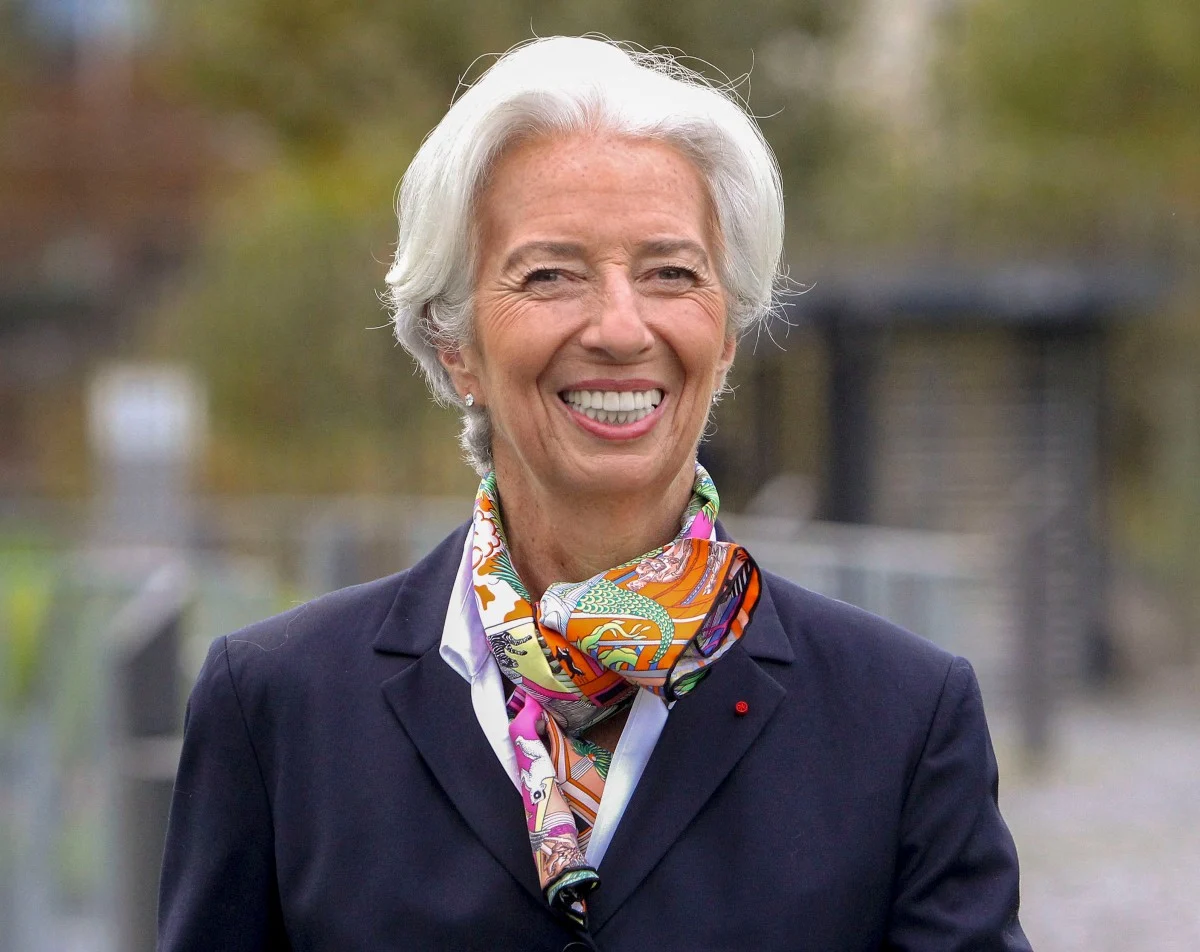
Christine Lagarde, President of the European Central Bank (ECB), has announced that she will step down from her position on February 7, 2027, bringing her tenure to an end several months before the scheduled expiration of her eight-year term.
The announcement was made on Thursday, October 29, 2026, after Lagarde informed the ECB’s Governing Council and European Council President António Costa of her decision. The ECB confirmed the development in an official statement.
Lagarde’s departure will open the door for European Union leaders to begin the process of selecting a new head for one of the world’s most influential central banks.
Her tenure was originally scheduled to end in October 2027. However, speculation about an early departure had been mounting for months, amid reports linking her to a possible leadership role at the World Economic Forum (WEF).
The ECB has not officially stated that the WEF position is the reason for her decision to leave early.
A Major Leadership Change for Europe
Lagarde took over as ECB president in November 2019, becoming the first woman to lead the institution. Before her appointment, she served as managing director of the International Monetary Fund (IMF) and previously held senior positions in the French government.
Her time at the ECB has been marked by significant economic challenges, including the COVID-19 pandemic, soaring inflation, the war in Ukraine and disruptions to global trade and energy markets.
Under her leadership, the central bank raised interest rates sharply in response to the inflation surge that followed the pandemic, before subsequently adjusting its monetary policy as economic conditions changed.
Her departure comes at a sensitive period for the eurozone, with policymakers continuing to grapple with inflationary pressures, higher borrowing costs and uncertainty surrounding the European economic outlook.
Who Could Replace Lagarde?
European leaders will now begin the process of identifying her successor. The appointment will be made by the European Council following the required nomination and consultation procedures.
Among the names being discussed as potential candidates are Klaas Knot, the former governor of the Dutch central bank, and Pablo Hernández de Cos, former governor of the Bank of Spain and current head of the Bank for International Settlements.
However, no successor has been officially appointed, and the final decision will depend on negotiations among European Union member states.
The leadership transition is also taking place as other senior positions within the ECB face changes, potentially leading to a broader reshaping of the institution’s leadership in 2027.
What Happens Next?
Lagarde’s early departure will allow European leaders to select a successor before France’s presidential election, scheduled for 2027. The timing has drawn attention because French President Emmanuel Macron will still be in office during the succession process.
The ECB president plays a central role in communicating monetary policy decisions, chairing meetings of the Governing Council and representing the bank internationally. However, interest-rate decisions are made collectively by the Governing Council rather than by the president alone.
The appointment of a new president will therefore be closely watched by financial markets, governments and businesses seeking clarity on the future direction of European monetary policy.
For now, Lagarde is expected to remain in office until February 7, 2027, when the leadership transition is due to take effect.