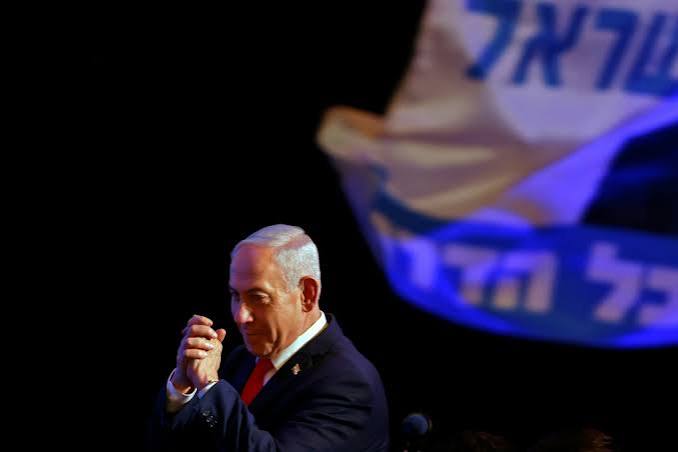
Israeli Prime Minister Benjamin Netanyahu’s political bloc has emerged ahead of its rivals in the country’s general election but failed to secure the parliamentary majority required to govern independently, setting the stage for difficult coalition negotiations and the possibility of another election.
Final election figures show that Netanyahu’s right-wing and far-right alliance secured 53 seats in the 120-member Knesset, Israel’s parliament. The opposition bloc, led by centrist politician Gadi Eisenkot, won 48 seats, while Arab-led political parties secured a combined 19 seats.
A party or coalition needs at least 61 seats to command a majority in the Knesset, leaving both leading camps short of the numbers required to form a government on their own.
Netanyahu’s Likud party emerged as the largest individual party with 27 seats, maintaining his position at the centre of Israel’s political landscape despite the setback for his broader coalition.
Arab Parties Emerge as Potential Kingmakers
The strong performance of Arab-led parties has become one of the defining features of the election, giving them potentially decisive influence over the negotiations to form Israel’s next government.
The Joint List secured 11 seats, while Ra’am won eight. Their combined total could provide a pathway for Netanyahu’s opponents to assemble a parliamentary majority, although disagreements among opposition parties over cooperation with Arab political groups remain a significant obstacle.
Joint List leader Yousef Jabareen has indicated a willingness to cooperate with the opposition to remove Netanyahu from power, without necessarily joining a government led by its members.
However, several opposition figures have expressed reservations about relying on Arab parties, complicating efforts to build an alternative administration.
The outcome has placed Arab political representatives in an unusually influential position as rival camps consider their options.
Netanyahu Faces Difficult Coalition Talks
Despite failing to secure a majority, Netanyahu remains caretaker prime minister while Israel’s political leaders negotiate the formation of a new government.
One possible outcome is a broader unity government involving parties outside his existing alliance. Another is a prolonged political deadlock that could eventually lead to another election if negotiations fail.
Netanyahu’s political survival has been notable given the criticism he has faced over the security failures surrounding the Hamas-led attacks of 7 October 2023, as well as disagreements over the government’s handling of the subsequent war.
His campaign also focused on Israel’s military achievements and security concerns, including tensions involving Iran.
The election result leaves him with a path to remain in power, but he will need to persuade potential partners to support an arrangement capable of commanding a parliamentary majority.
Election Fraud Allegations Spark Controversy
The election aftermath has also been marked by controversy over allegations of irregularities involving Arab-led political groups.
Netanyahu’s Likud party raised claims of possible foreign interference and alleged vote-buying, but authorities had not presented evidence establishing widespread electoral fraud.
Ra’am leader Mansour Abbas denied wrongdoing and welcomed an investigation. Israel’s election authorities also rejected suggestions of widespread problems with the integrity of the vote, describing claims of systematic irregularities as unfounded.
The allegations have intensified political tensions, with opposition figures accusing Netanyahu and his allies of attempting to undermine confidence in the election outcome.
Security officials have stressed that investigations into suspected incidents should not be interpreted as casting suspicion on Arab citizens who participated lawfully in the election.
What Happens Next?
The immediate challenge is to determine which political leader can secure sufficient support to form a government.
President Isaac Herzog is expected to consult party representatives before deciding whom to task with forming the next administration, following certification of the official results.
The negotiations could take weeks, with the final outcome depending on whether rival parties can overcome their ideological differences and agree on a workable coalition.
For now, Netanyahu’s bloc has finished ahead of its rivals but remains short of the majority needed to govern alone. The strong showing by Arab-led parties has added another layer of complexity to the negotiations, leaving Israel facing an uncertain political future.
#BenjaminNetanyahu #IsraelElection #IsraelPolitics #MiddleEast #GadiEisenkot #Knesset #WorldNews #OnPointGist