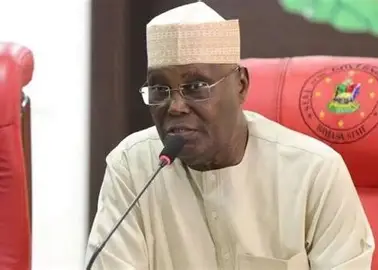
Former Vice-President and African Democratic Congress (ADC) presidential candidate, Atiku Abubakar, has criticized President Bola Tinubu’s administration over its planned ₦70,000 monthly transport allowance for public service workers, arguing that the intervention will do little to address Nigeria’s wider cost-of-living crisis.
Atiku described the six-month payment, scheduled to begin in November 2026, as an inadequate response to the rising prices of food, electricity, fuel, rent and other essential goods and services.
In a statement issued by Phrank Shaibu, Director of Strategic Communication of the ADC Presidential Campaign Council, the former vice-president accused the Federal Government of relying on temporary financial relief instead of implementing lasting solutions to the economic pressures facing Nigerians.
He argued that the hardship confronting households and businesses extends far beyond transportation, affecting nearly every aspect of daily life.
‘What About Nigerians Outside the Public Service?’
Atiku questioned why the proposed allowance was restricted to public service workers when private-sector employees, traders, small-business owners, transport operators and millions of Nigerians working in the informal economy were also struggling with rising expenses.
He maintained that a temporary payment to a section of the workforce could not adequately address a national economic problem affecting people across different occupations and income levels.
The ADC presidential candidate also called on the government to clarify who would qualify for the allowance, when payments would be made and how the intervention would relate to ongoing discussions about workers’ wages.
According to Atiku, Nigerians need clear commitments on wages and sustained measures to improve their purchasing power rather than a series of short-term announcements.
Atiku Questions Value of ₦70,000
To illustrate his concerns, Atiku pointed to the rising cost of petrol, arguing that at an assumed price of ₦1,400 per litre, the ₦70,000 allowance would purchase approximately 50 litres.
He questioned whether that quantity would provide meaningful relief for workers over an entire month, particularly those who travel long distances or face additional household expenses.
He also cited the rising cost of electricity and cooking fuel, which he said had increased operating expenses for barbers, restaurant owners, shopkeepers and other small-business operators.
Atiku argued that these pressures ultimately affect consumers through higher prices for goods and services, further reducing the value of workers’ earnings.
Former Vice-President Faults Previous Relief Measures
Atiku also criticized previous government interventions intended to reduce transportation costs and cushion the impact of economic reforms.
He questioned the effectiveness of the compressed natural gas (CNG) initiative, arguing that many Nigerians were yet to experience the promised reduction in commuting costs.
He further accused the administration of responding to the consequences of petrol subsidy removal with temporary payments rather than adequately addressing the wider economic challenges.
As an alternative, Atiku proposed a transparently managed production subsidy for fuel refined in Nigeria, which he said could provide relief at the pump while limiting the corruption and financial leakages associated with previous subsidy arrangements.
The proposal, however, would require a clear implementation framework, funding arrangements and safeguards to ensure that the benefits reach consumers.
Labour Also Raises Concerns
Atiku’s criticism comes amid wider debate over the Federal Government’s transport allowance proposal.
The Trade Union Congress (TUC) has also rejected the proposed temporary payment, arguing that workers need sustainable salary increases rather than short-term wage support.
The disagreement reflects growing pressure on the government to address workers’ purchasing power as households continue to contend with high transportation, food and other living expenses.
The Federal Government’s planned allowance is intended to provide temporary support to public service workers for six months, beginning in November.
Atiku insists that while the payment may offer some assistance to eligible workers, it cannot by itself resolve the broader economic difficulties facing the country.
He called for policies that would lower the cost of living, improve household incomes and make it easier for businesses to operate, arguing that Nigerians need lasting economic relief rather than temporary allowances.
#AtikuAbubakar #BolaTinubu #NigeriaEconomy #CostOfLiving #WorkersWelfare #TransportAllowance #NigerianPolitics #OnPointGist