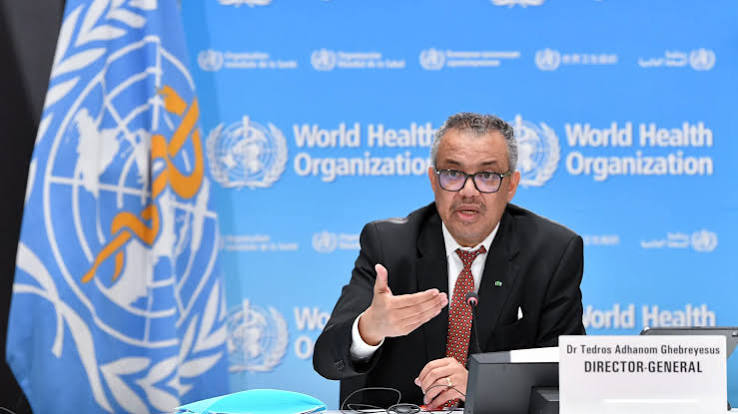
The World Health Organization (WHO) Director-General, Dr Tedros Adhanom Ghebreyesus, has urged countries to urgently conclude negotiations on the global Pandemic Agreement, warning that the ongoing Ebola outbreak in the Democratic Republic of the Congo (DRC) highlights the dangers of leaving the world unprepared for future health emergencies.
Tedros issued the call on Monday, November 2, 2026, as negotiations resumed in Geneva, Switzerland, on the outstanding provisions needed to complete the agreement.
He said the continuing Ebola epidemic, alongside other recent disease outbreaks, demonstrates that infectious disease threats can emerge unexpectedly and spread beyond national borders.
According to the WHO chief, no country can adequately protect itself from a pandemic by acting alone, stressing the need for international cooperation, effective surveillance and equitable access to medical resources.
“Let us finish the job,” Tedros told delegates, urging member states to complete negotiations on the Pathogen Access and Benefit-Sharing (PABS) system, the remaining component required before the Pandemic Agreement can proceed towards implementation.
The proposed system is designed to establish arrangements for sharing pathogen samples and genetic information while ensuring that the benefits arising from their use, including vaccines, medicines and diagnostic tools, are distributed more fairly.
Tedros recalled the experience of the COVID-19 pandemic, when vaccines were developed rapidly but many countries struggled to obtain sufficient supplies as wealthier nations secured large quantities.
He warned that such inequalities could cost lives, prolong future outbreaks and increase the risk of new variants emerging.
The WHO chief said the international community had already taken several steps to strengthen global health security, including improving disease surveillance, supporting vaccine development and building national preparedness capacities.
However, he maintained that completing the remaining negotiations was essential to connecting these efforts into a more coordinated international response.
Tedros urged delegates to approach the discussions with flexibility, focus on achievable solutions and prioritize public health over political disagreements.
He also emphasized that the agreement should respect national sovereignty while enabling countries to cooperate against shared health threats.
The negotiations come as health authorities continue responding to the Ebola outbreak affecting the DRC and Uganda. The outbreak, caused by the Bundibugyo species of Ebola virus, was declared a public health emergency of international concern in May 2026.
The WHO has been supporting affected countries through surveillance, contact tracing, clinical preparedness, community engagement and efforts to accelerate the development of medical countermeasures.
Tedros said the ultimate test of the agreement would be whether it enabled countries to respond more quickly and fairly when the next serious disease threat emerges.
He called on participating governments to use the latest round of negotiations to resolve outstanding differences and deliver a framework capable of protecting populations across the world.
The WHO maintains that stronger international coordination, adequate financing and equitable access to lifesaving tools will be crucial to preventing future outbreaks from escalating into global emergencies.
#WHO #EbolaOutbreak #PandemicAgreement #GlobalHealth #TedrosAdhanomGhebreyesus #PublicHealth #HealthNews #OnPointGist