
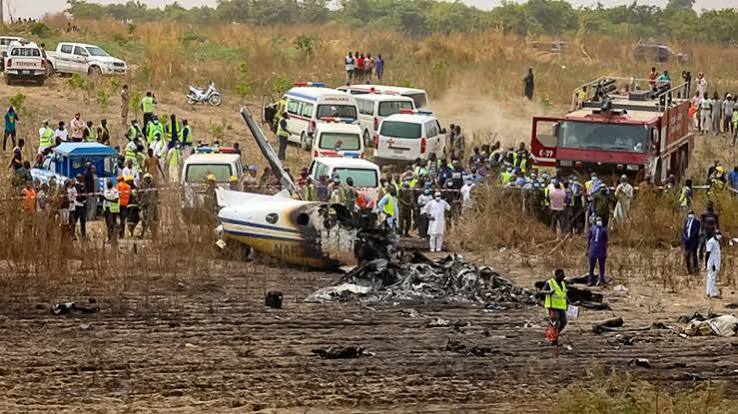
The fatal crash of a Nigerian Air Force ATR-42 aircraft in Ondo State, which claimed the lives of all 32 people on board, has renewed scrutiny of the safety record of Nigeria’s military aviation over the past decade.
The aircraft, carrying 25 passengers and seven crew members, was travelling from Benin City to Lagos on what was described as a routine support mission when it lost contact at about 9:13 a.m. Wreckage was later discovered near the Naval Base in Igbokoda, Ilaje Local Government Area of Ondo State.
President Bola Tinubu expressed condolences to the families of the victims and ordered an investigation into the crash.
A decade of military aviation incidents
The Ondo crash is the latest in a series of Nigerian Air Force aircraft accidents and incidents recorded since 2016.
The incidents have involved different aircraft, missions and circumstances, ranging from training exercises and routine flights to combat operations.
In 2018, two F-7Ni fighter jets collided over Abuja during preparations for an Independence Day ceremony. One pilot died while others survived after ejecting.
In 2019, an Mi-35M attack helicopter crashed in Damasak, Borno State, killing all five crew members. Another helicopter accident was recorded later that year in Enugu without fatalities.
2021 was particularly devastating
The most tragic period came in 2021, when three major military aviation incidents occurred within five months.
In February, a Beechcraft King Air 350i crashed shortly after reporting an engine problem while attempting to return to Abuja airport. All seven people on board died.
The aircraft had been travelling towards Minna for a surveillance mission connected to efforts to rescue abducted students from Government Science College, Kagara.
In March, an Alpha Jet disappeared from radar in the North-East. Boko Haram claimed responsibility, but the available public evidence did not conclusively establish the cause of the crash.
Then, in May, another King Air 350 crashed near Kaduna International Airport, killing 11 people, including the then Chief of Army Staff, Lt Gen Ibrahim Attahiru.
Other incidents followed
Military aviation incidents continued in subsequent years.
A Super Mushshak trainer crashed in Kaduna in 2022, killing two pilots.
In 2023, an FT-7NI trainer crashed in Makurdi, although both pilots survived. An Mi-171 helicopter also crashed in Niger State while evacuating wounded troops, while an Mi-35P went down shortly after take-off in Rivers State. The crew survived.
Another Super Mushshak was involved in a minor mishap near Kaduna in 2024, with both pilots escaping unharmed.
The Nigerian Air Force announced in 2025 that it had recorded a full year without a mishap, attributing the improvement to enhanced training, inspections and safety management. However, an Alpha Jet subsequently experienced an emergency after take-off from Kainji in December, although the crew successfully ejected.
No single cause established
The pattern does not point to one confirmed explanation for the various incidents.
The aircraft involved have performed different roles, while some crashes occurred during combat operations, others during training and others during routine or test flights.
Questions surrounding maintenance, crew training, flight planning, operational tempo and availability of spare parts therefore require evidence-based examination rather than speculation.
Similarly, claims that some aircraft were shot down in conflict zones cannot automatically be accepted without supporting evidence such as wreckage analysis, radar data and other forensic findings.
Transparency remains an issue
Investigations have been ordered after many of the incidents, but detailed findings have not always been made publicly available.
The investigation into the 2021 Kaduna crash involving the Chief of Army Staff, for instance, produced 27 initial findings and eight immediate safety recommendations.
However, questions remain about the extent to which recommendations from previous investigations were implemented.
For the Ondo investigation to command public confidence, aviation experts and the wider public will expect authorities to examine the aircraft’s wreckage, flight data, air-traffic communications, maintenance records, weather conditions, crew qualifications and duty schedules.
The probe will also need to distinguish confirmed evidence from unverified claims and identify whether established safety procedures were followed.
The bigger question
Beyond determining what brought down the ATR-42, the latest tragedy has revived a larger question about the lessons Nigeria has learnt from previous military aviation accidents.
The loss of 32 lives has therefore become more than an isolated aviation tragedy. It has renewed calls for stronger safety oversight, transparent investigations and effective implementation of recommendations arising from previous crashes.
For the families who lost loved ones, however, the most important outcome will ultimately be ensuring that the lessons from the Ondo tragedy prevent another avoidable loss of life.