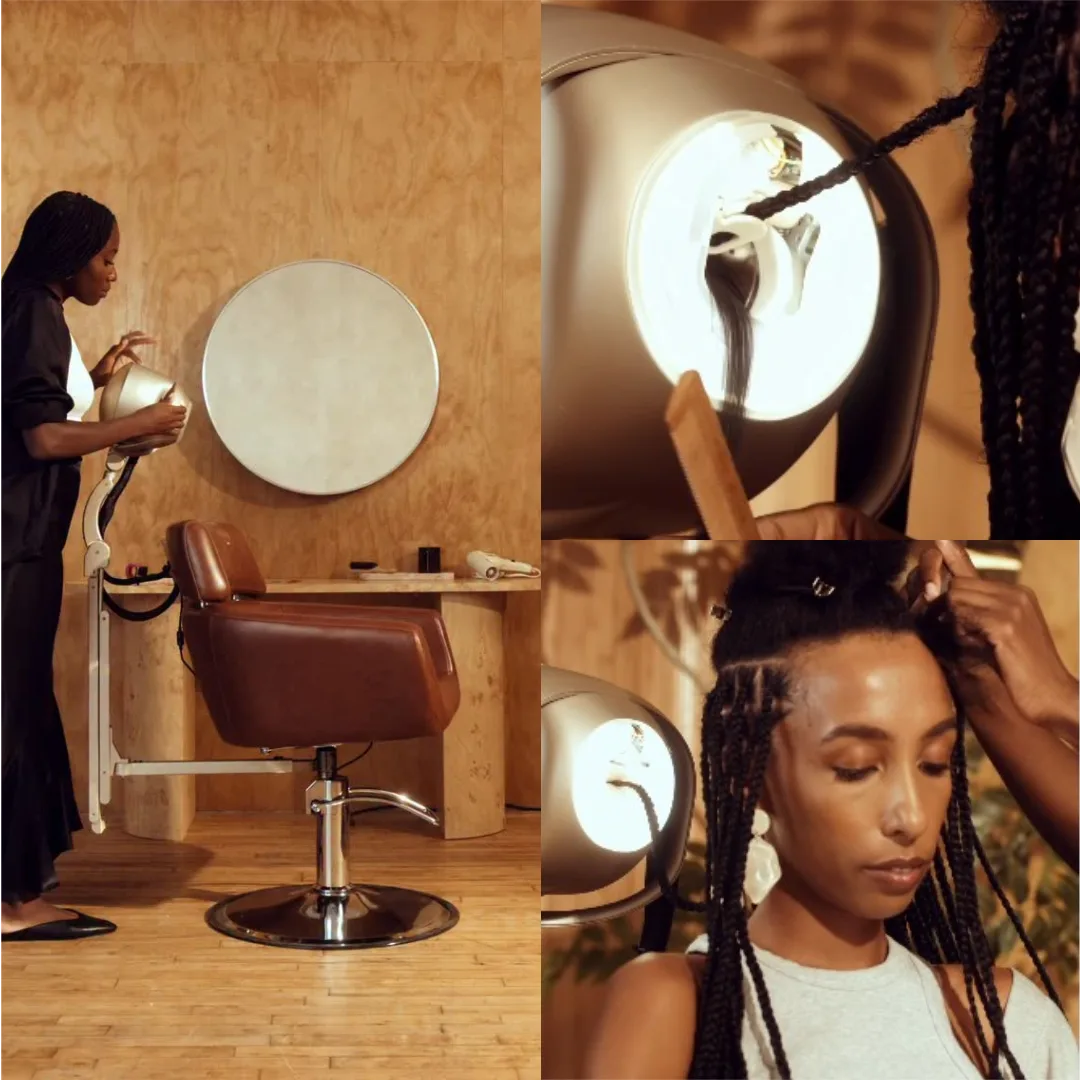
Nigerian-American engineer and entrepreneur Yinka Ogunbiyi has unveiled a new demonstration of HaloBraid, an innovative hair-braiding device designed to help professional hairstylists complete braids up to five times faster.
The technology is attracting attention for its potential to transform the beauty industry by reducing the hours spent on protective hairstyles while easing the physical strain associated with repetitive braiding.
Ogunbiyi, a Harvard-trained engineer, developed the device after experiencing firsthand how time-consuming the process could be. During the COVID-19 lockdown, she reportedly spent four days braiding her own hair, prompting her to explore how engineering could make the experience easier.
How the Robot Works
HaloBraid is designed to assist hairstylists rather than replace them.
The process begins with the stylist sectioning the client’s hair and starting the braid manually. The device then takes over the repetitive weaving along the length of the braid, after which the stylist finishes and seals the ends.
By automating this part of the process, the company aims to reduce appointment times while allowing professionals to retain control over the final hairstyle.
The innovation could also help reduce the strain that prolonged braiding places on stylists’ hands, wrists, shoulders and backs.
$7m Funding Boost for Innovation
HaloBraid has reportedly raised $7m in seed funding in a round led by Seven Seven Six, the venture capital firm founded by Reddit co-founder Alexis Ohanian. Other investors include AlleyCorp and Bling Capital.
The company has also attracted more than 7,000 professional salons to its waiting list ahead of its commercial rollout.
The funding is expected to support the company’s efforts to bring the technology to the market and expand its reach within the beauty industry.
Could Technology Change Traditional Hair Braiding?
Hair braiding remains an important cultural and commercial practice, particularly among African communities and the global Black diaspora. However, the lengthy process can be physically demanding for both clients and professional stylists.
HaloBraid seeks to combine traditional hairstyling expertise with automation, allowing professionals to spend less time on repetitive movements and more time attending to clients.
Its wider impact will depend on affordability, performance across different hair types and styles, and how easily salons can incorporate the device into their everyday operations.
Ogunbiyi’s invention highlights how African talent in the diaspora is applying engineering and technology to everyday challenges, potentially opening new opportunities for innovation in the global beauty industry.