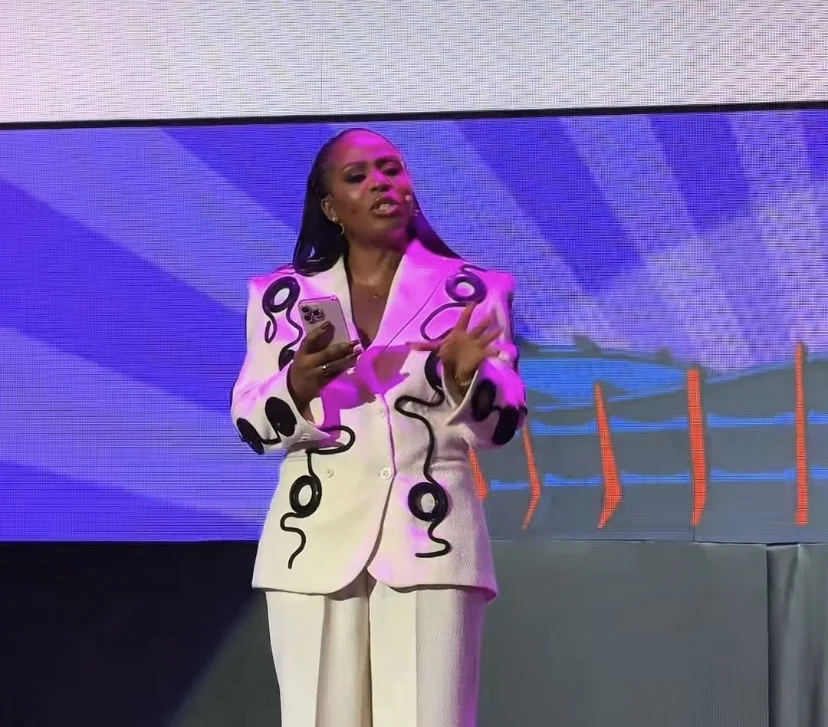
Talent manager and media entrepreneur Toyosi Etim-Effiong has called on Nollywood actors to explore film profit-sharing agreements that could enable them to earn additional income beyond their regular acting fees.
Etim-Effiong said actors should not depend exclusively on the one-time payments they receive for appearing in films, arguing that properly negotiated contracts could allow them to benefit financially when their projects perform well commercially.
She made the remarks during an interview following a session at the Creative Economy Stage of Moonshot 2026, organised by TechCabal in Lagos. The session, titled Africa’s Creative Economy: The Numbers and the Next Bet, examined opportunities for growth and investment across the continent’s creative industries.
The founder and Chief Executive Officer of That Good Media explained that professional talent managers could negotiate back-end agreements that provide actors with additional payments when films achieve agreed financial targets.
Using a hypothetical example, she explained that an actor could receive an additional payment if a film generated more than ₦1 billion in revenue, depending on the terms negotiated in the contract.
According to her, although some professionals have begun securing such arrangements, profit-sharing agreements remain uncommon in Nollywood.
She expressed hope that the practice would become more widespread, giving actors a greater opportunity to benefit from the commercial success of their work rather than relying solely on their initial fees.
Nollywood Can Learn From the Music Industry
Etim-Effiong pointed to Nigeria’s music industry as an example of how creative professionals can establish systems that allow artists to earn beyond their initial payments.
She noted that royalty structures did not always exist in their current form in the music business but developed through the efforts of professionals who worked towards creating more standardised arrangements.
She believes similar progress is possible in Nollywood if filmmakers, actors, managers and other industry stakeholders work together to establish clearer commercial structures.
Such agreements, she suggested, could provide performers with additional income opportunities while helping to build more sustainable careers.
Talent Management Remains a Major Challenge
Beyond profit-sharing, Etim-Effiong identified the shortage of well-trained talent managers as a major challenge facing Nigeria’s creative economy.
She argued that while considerable attention has been devoted to training actors, singers, cinematographers and other creatives, insufficient emphasis has been placed on developing professionals who can turn their talents into sustainable businesses.
According to her, skilled managers play a critical role in negotiating contracts, identifying commercial opportunities, building professional relationships and ensuring that creatives receive appropriate value for their work.
Etim-Effiong, who also founded and directs TGM Academy, said the industry needs more professionals capable of representing actors, musicians and other creatives while helping them develop long-term career strategies.
She stressed that talent management should be treated as a serious business, requiring planning, commitment and an understanding of each client’s professional needs.
She advised managers to avoid taking on too many clients, recommending that they represent no more than three talents at a time, depending on the workload involved.
Building a More Sustainable Nollywood
The comments have renewed discussions about how Nollywood can improve the financial security of actors, particularly those whose earnings depend on securing regular film roles.
Profit-sharing arrangements could provide an additional source of income, although their success would depend on clearly written contracts, transparent revenue reporting and mutually agreed payment terms.
Industry stakeholders would also need to consider the financial risks carried by producers, many of whom invest their own resources in film production.
Nevertheless, Etim-Effiong’s position highlights the importance of professional representation and better commercial structures in an industry where creative talent does not always translate into long-term financial stability.
As Nollywood expands its reach through cinemas, streaming platforms and international distribution, the development of more effective business arrangements could help ensure that actors have greater opportunities to benefit from the success of their work.
Her message is clear: building a successful acting career requires more than talent and securing movie roles. Strong management, effective negotiations and sustainable business arrangements can also make a significant difference.