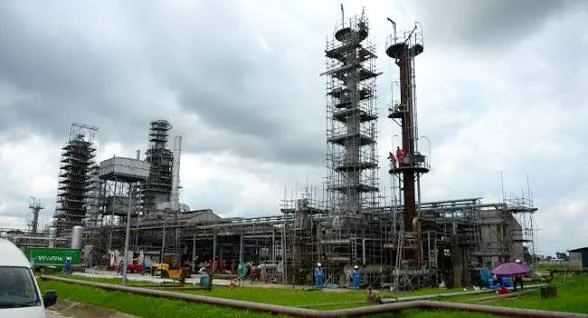
Nigeria’s petroleum refining sector is projected to receive a significant boost in 2027, with seven new modular refineries expected to begin operations and add a combined processing capacity of 83,000 barrels per day.
The projection was disclosed by George Maher-Bonnett of Argus Media during a presentation at the OTL Africa Downstream conference in Lagos, where he examined developments shaping Nigeria’s petroleum market and the wider African energy industry.
Presenting the African Energy Outlook, Maher-Bonnett revealed that four modular refineries were operating in Nigeria as of September 2026, with a combined capacity of 32,000 barrels per day.
The proposed seven facilities would add more than two and a half times the capacity currently provided by those four operating modular refineries, potentially strengthening local production and reducing dependence on imported petroleum products.
However, the presentation did not disclose the names of the seven proposed refineries, their owners, locations, individual capacities or specific commissioning dates. Their expected contribution will therefore depend on whether the projects are completed and begin production as projected.
Dangote refinery reshapes the market
The anticipated expansion comes as the Dangote Petroleum Refinery continues to play a growing role in Nigeria’s domestic fuel supply.
Maher-Bonnett described the 700,000-barrel-per-day facility in Lekki as operating at a high rate, with steady petrol output. Increasing local production is improving Nigeria’s ability to meet domestic demand and changing the economics of importing refined petroleum products from Europe.
The arrival of additional modular refineries could further diversify the country’s refining capacity, introduce more competition and strengthen supply options for petroleum products.
Nevertheless, the impact of the new facilities will depend on factors such as access to crude oil, operational costs, distribution infrastructure and the ability of the refineries to maintain consistent production.
Higher fuel prices weigh on demand
Despite the expansion in domestic refining, Nigeria’s fuel demand has reportedly declined in 2026, with higher pump prices identified as a major factor.
The industry presentation also noted that government intervention during the period under review had been limited, apart from a price reduction by the Nigerian National Petroleum Company Limited in October.
The decline in consumption highlights the pressure high fuel prices are placing on households and businesses, even as the country seeks to strengthen domestic refining.
For consumers, the key issue will be whether increased local production eventually translates into more stable supplies and affordable prices.
West Africa’s refining landscape is changing
Nigeria is not the only country seeking to increase local refining capacity. The presentation also highlighted Ghana’s Tema refinery, which has a stated capacity of 45,000 barrels per day and is increasing production.
As refining capacity grows across West Africa, the region could become less dependent on petroleum products shipped from Europe.
Higher freight costs and changing trade economics are also making some European supply routes less competitive, potentially creating greater opportunities for African refineries to serve regional markets.
If the seven proposed Nigerian facilities become operational as expected, they could strengthen the country’s position in the regional petroleum industry and contribute to a broader shift towards domestic refining.
However, the projected capacity should not automatically be interpreted as a guarantee of lower petrol prices. The eventual effect on consumers will depend on production costs, crude oil supply, market competition and distribution expenses.
For now, the planned commissioning of the seven refineries represents a significant development for Nigeria’s downstream petroleum sector, with 2027 expected to be an important year for the country’s drive to expand domestic refining.