
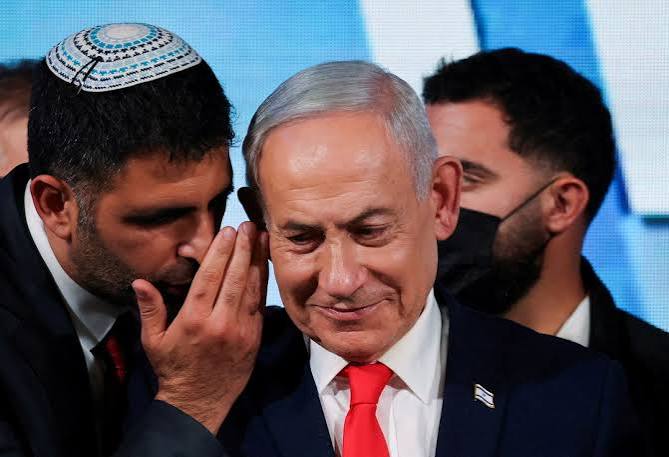
Israeli opposition leader Gadi Eisenkot has emerged as a leading contender to form the country’s next government after a long-standing ally of Prime Minister Benjamin Netanyahu declined to endorse him following the recent parliamentary election.
The development has weakened Netanyahu’s prospects of retaining power, with President Isaac Herzog consulting political parties to determine which candidate has the best chance of assembling a governing coalition.
The October 27 election ended without either Netanyahu or Eisenkot securing a clear parliamentary majority, leaving Israel facing a difficult round of coalition negotiations.
Eisenkot, a former military chief who has campaigned on restoring national unity, is gaining support from opposition parties and lawmakers representing Israel’s Arab minority.
Religious Party Breaks With Netanyahu
United Torah Judaism, an ultra-Orthodox Jewish party that has repeatedly supported Netanyahu in previous coalition negotiations, declined to recommend him for another term as prime minister.
The party also stopped short of endorsing Eisenkot, informing Herzog that it would not recommend any member of parliament to form the next government.
The decision is significant because United Torah Judaism holds seven seats in the 120-member Knesset and has traditionally been part of Netanyahu’s political support base.
The party’s position is closely linked to disagreements over exemptions from compulsory military service for ultra-Orthodox religious students.
While Netanyahu’s government has maintained the exemptions, the issue has generated growing resentment among Israelis whose military reservists have faced repeated deployments during the wars involving Gaza, Lebanon and Iran.
United Torah Judaism lawmaker Isaac Pindrus said determining the status of religious students would remain a priority for the party in any future government.
Political observers believe the party’s decision may be intended to pressure Netanyahu rather than rule out working with him entirely.
Arab Parties Could Play Decisive Role
Eisenkot has also received support from the Raam party, led by Mansour Abbas, which represents Arab citizens of Israel.
Arab-majority parties collectively secured 19 seats in the latest election, strengthening their potential influence in the coalition negotiations.
However, Eisenkot’s ability to rely on their support remains uncertain. Although the numbers could help him assemble a government, cooperation with Arab lawmakers could alienate some of his other political allies.
One potential obstacle is Avigdor Liberman, a prominent Netanyahu critic whose political position remains hawkish on Palestinian issues and who has resisted arrangements involving Arab parties.
Eisenkot has sought to appeal to voters across Israel’s political spectrum, including secular voters who oppose exemptions from military service for ultra-Orthodox students.
Netanyahu’s Bloc Still Holds More Seats Than Opposition Group
Despite the setback, Netanyahu’s political bloc remains a significant force in parliament.
The bloc, including United Torah Judaism, holds 53 seats, compared with 48 secured by Eisenkot’s Jewish-led opposition bloc. The remaining balance is held by Arab-majority parties.
Although Netanyahu’s Likud party won the largest number of seats as an individual party, his wider nationalist-religious alliance failed to secure a governing majority.
This leaves both candidates facing the challenge of persuading smaller parties to support a coalition agreement.
Netanyahu has also criticised the possibility of his opponents relying on Arab lawmakers, questioning their role in the political process.
President Herzog to Decide Who Gets the Mandate
Under Israel’s parliamentary system, President Herzog will select the lawmaker he believes has the best chance of forming a government.
The selected candidate will have 28 days to assemble a coalition, with a possible extension of 14 days. If the attempt fails, the president can turn to another candidate.
The consultations are therefore a crucial stage in determining whether Israel will see a change of government or face further political uncertainty.
For Eisenkot, the growing number of recommendations could strengthen his chances of receiving the mandate. For Netanyahu, the refusal of a traditional ally to endorse him presents another challenge as he seeks to remain in office.
The final outcome will depend on whether either candidate can build a coalition capable of commanding a majority in parliament.
#Israel #GadiEisenkot #BenjaminNetanyahu #IsraeliPolitics #MiddleEast #UnitedTorahJudaism #WorldNews #OnPointGist