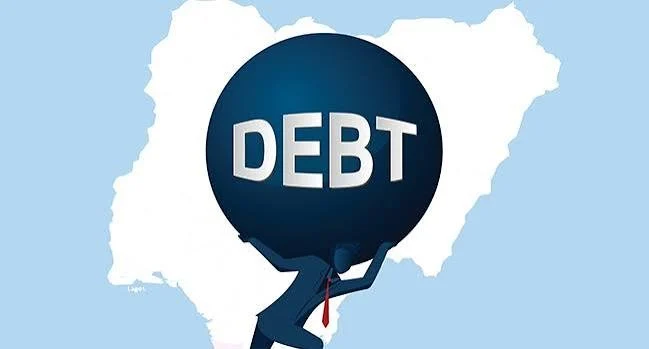
Nigeria spent ₦5.28tn servicing its domestic debt between January and June 2026, as interest payments on government securities continued to consume a substantial portion of public funds.
Data released by the Debt Management Office (DMO) showed that interest and rental payments accounted for ₦4.95tn of the total expenditure, while ₦333.96bn was used to repay the principal on promissory notes.
The figures highlight the growing cost of domestic borrowing as the Federal Government balances debt obligations with competing demands for infrastructure, healthcare, education and other public services.
Government Bonds and Treasury Bills Account for Most Payments
Federal Government bonds accounted for the largest share of domestic debt interest payments during the six-month period, attracting approximately ₦3.35tn.
Nigerian Treasury Bills followed, with interest payments totalling ₦1.49tn. Together, the two instruments accounted for most of the government’s domestic interest expenditure.
Monthly payments on Federal Government bonds fluctuated throughout the period. The government paid ₦462.44bn in January, ₦707.25bn in February and ₦792.34bn in March.
Payments subsequently declined to ₦530.84bn in April and ₦332.49bn in May before rising to ₦525.05bn in June.
Treasury bill interest payments reached approximately ₦1.49tn over the six months, with March recording the highest monthly payment of about ₦481.47bn.
Other domestic debt instruments also attracted payments. These included ₦92.29bn in rental payments on Federal Government Sukuk, ₦8.90bn in interest on FGN Savings Bonds and ₦5.56bn in green bond interest payments.
Government Repays ₦333.96bn in Promissory Notes
Beyond interest expenses, the Federal Government repaid ₦333.96bn in principal on promissory notes between January and June 2026.
March recorded the highest monthly repayment at ₦154.23bn, followed by June, when ₦136.96bn was paid.
Of the total principal repayments, ₦263.27bn related to naira-denominated promissory notes, while foreign-currency-denominated notes accounted for ₦70.69bn.
The figures show that interest payments remained the dominant component of domestic debt servicing during the period.
March Records Highest Monthly Debt-Service Expenditure
Total monthly domestic debt servicing varied considerably during the first half of the year.
March recorded the highest expenditure at approximately ₦1.43tn, followed by February at ₦967.67bn.
June’s total stood at ₦811.62bn, while April recorded ₦765.19bn and January ₦741.82bn. May had the lowest monthly expenditure, at ₦567.16bn.
These fluctuations reflect the timing of interest obligations and principal repayments across the government’s domestic debt instruments.
Economists Warn of Pressure on Development Spending
The substantial expenditure on domestic debt servicing has renewed concerns about the amount of government resources available for capital projects and essential public services.
An Abuja-based economist, Nonso Iheoma, warned that high debt-service costs could leave the government with fewer resources to address critical development needs.
He acknowledged that borrowing remained necessary but called for changes in the sources of government financing. He also noted that returns on fixed-income securities during the period exceeded or approached 20 per cent amid elevated interest rates.
Nigeria’s total debt-service expenditure reached approximately ₦16tn in 2025, reflecting the combined pressure of domestic interest payments and external debt obligations.
The latest figures underscore the challenge facing fiscal authorities as they seek to manage borrowing costs while funding infrastructure, social services and other national priorities.