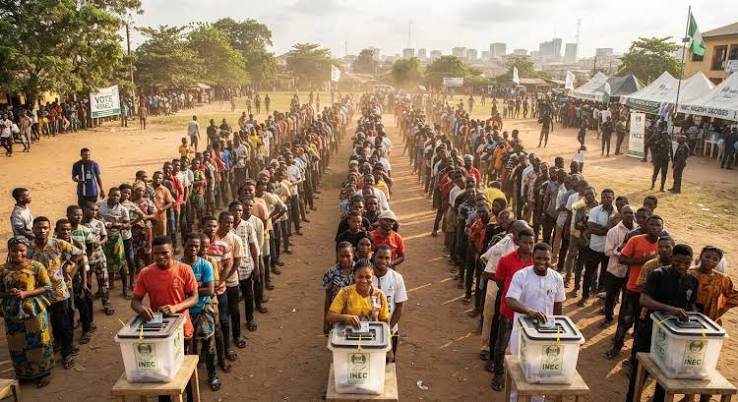
With Nigeria’s youth population estimated at more than 142 million, attention is increasingly turning to whether young people can translate their numerical strength into decisive political influence in the 2027 general elections.
The debate has gained momentum following the Independent National Electoral Commission’s (INEC) disclosure that more than 9.32 million young Nigerians registered during the 2026 Continuous Voter Registration exercise.
Despite these figures, political analysts and youth advocates remain divided over whether the growing population of young Nigerians will translate into stronger participation at the ballot box.
While some believe young people are increasingly determined to challenge the status quo, others warn that voter apathy, distrust in electoral institutions and weak political organisation could prevent them from making a decisive impact.
Youths Warned Against Relying on Social Media
Jerry Tobi Olanrewaju, an agricultural entrepreneur and founder of Jet Farms and Agro Solutions Limited, expressed concern that many young Nigerians were losing confidence in the electoral process.
He said young farmers, in particular, were struggling with rising production costs, expensive transportation, limited access to affordable financing and unstable markets.
According to him, these challenges have weakened the optimism of young people who once viewed agriculture as a pathway to economic independence.
Olanrewaju urged young Nigerians to move beyond online political discussions and become more deliberate about their participation in the 2027 elections.
He stressed that political engagement should focus on credible leadership, accountability and policies capable of addressing the everyday challenges confronting citizens.
Youth Leader Says Young Nigerians Are Tired of Political Manipulation
Abareowei Benaembele Donald, a youth leader in Bayelsa State, maintained that young Nigerians were becoming more politically aware and increasingly unwilling to accept unfulfilled promises from political leaders.
He argued that issues such as unemployment, insecurity, rising living costs, poor educational opportunities and an uncertain future would influence how young voters approach the next election.
Donald warned political parties against using young people merely as campaign supporters, rally participants and online promoters while excluding them from important decisions.
He called on youths to demand meaningful representation and insist that campaign promises translate into tangible improvements in their lives.
He also emphasised that having a large population would not automatically guarantee political influence without organisation, voter education and sustained demands for accountability.
Electoral Trust Remains a Major Concern
Abuja-based legal and public affairs analyst Toluwa Odekhe said young Nigerians had the numbers to influence the election but had yet to demonstrate that they could decisively shape its outcome.
He identified voter turnout, confidence in electoral institutions and the ability to field and protect credible candidates as major factors that could determine their impact.
Odekhe pointed to the 2026 voter registration exercise, during which more than 9.32 million young Nigerians reportedly registered, as evidence of significant interest in electoral participation.
However, he warned that registration alone was insufficient if eligible voters failed to turn out on election day.
He also highlighted the importance of transparent election administration, credible result collation and effective safeguards against vote-buying, intimidation and violence.
According to him, restoring public confidence in the electoral process would be essential to converting young people’s enthusiasm into actual votes.
Political Organisation Could Determine Youth Influence
Public affairs analyst Patrick Onoja argued that Nigeria’s youth population remained politically powerful in theory but lacked sufficient organisation to fully exercise that influence.
He said many young Nigerians were active on social media but had limited involvement in political structures at the ward and grassroots levels, where candidates often build the networks needed to win elections.
Onoja also cautioned against treating young voters as a single political bloc, noting that differences in ethnicity, religion, economic circumstances and personal aspirations could divide their interests.
He urged young people to become more involved in political parties, support credible candidates, participate in voter education and organise at community level.
He further called on youths to prioritise electoral reform, employment and security as common demands capable of bringing different groups together.
Will Young Nigerians Decide the 2027 Elections?
The central question ahead of 2027 is whether young Nigerians will transform their population advantage into sustained electoral participation.
Their influence will depend not only on how many register to vote but also on how many collect their Permanent Voter Cards, turn out on election day, protect their votes peacefully and hold elected officials accountable after the elections.
For political parties, the growing youth population represents both an opportunity and a challenge. Campaign messages centred on employment, education, security, economic opportunity and accountable leadership may prove particularly important in winning their confidence.
Ultimately, Nigeria’s young people could significantly shape the 2027 elections, but their numbers alone will not guarantee change. Organisation, participation and confidence in the electoral process may prove just as important as their numerical strength.
#2027Elections #NigerianYouths #INEC #YouthParticipation #NigerianPolitics #VoterRegistration #GoodGovernance #OnPointGist