

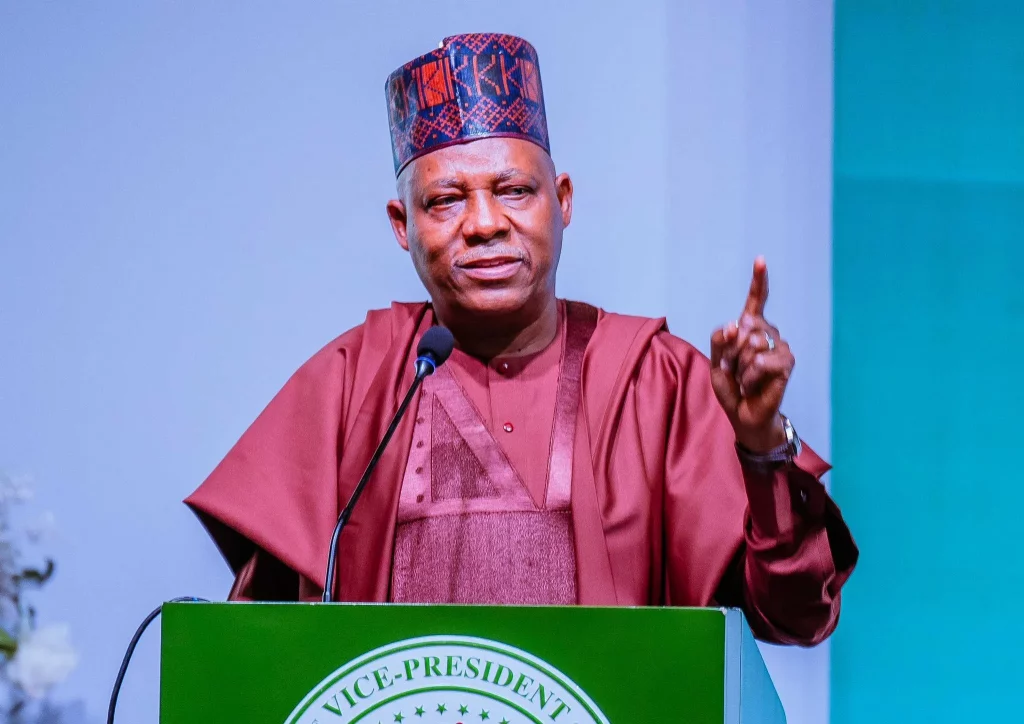
Vice-President Kashim Shettima has called on Nigerians, particularly business leaders and influential citizens, to support the economic reforms introduced by President Bola Tinubu’s administration, warning that reversing the policies could undermine efforts to rebuild the country’s economy.
Shettima made the appeal on Monday while representing Tinubu at the 32nd Nigerian Economic Summit in Abuja, where he stressed the need for consistency in economic policymaking, regardless of which political party holds power.
According to the Vice-President, Nigeria must decide whether to sustain the current reform programme or abandon it for alternative policies that could create fresh economic challenges.
He argued that long-term national development requires policies that remain stable across successive administrations rather than being changed to suit political interests.
Shettima Defends Fuel Subsidy Removal
The Vice-President defended Tinubu’s decision to remove the petrol subsidy in May 2023, describing the former arrangement as a significant burden on government finances.
He maintained that the subsidy system encouraged abuses, diverted public resources and contributed to economic distortions, including the smuggling of cheaper Nigerian fuel into neighbouring countries.
Shettima argued that delaying difficult economic decisions would have increased the cost of addressing the country’s financial challenges.
He urged Nigerians to consider the long-term implications of economic policy choices rather than judging reforms solely by their immediate effects.
Calls for Continuity Beyond Tinubu’s Administration
Shettima also urged future governments to preserve economic policies that support growth and national development, irrespective of political affiliations.
He said Nigeria’s economic future should not depend on the fortunes of individual administrations but on a consistent framework capable of attracting investment, supporting businesses and expanding employment opportunities.
The Vice-President highlighted reforms in taxation, electricity, agriculture, solid minerals and petroleum production as areas intended to strengthen economic activity and improve the country’s investment climate.
He cited reported growth in Nigeria’s gross domestic product and increased capital importation as signs of progress under the current reform programme.
However, he emphasised that economic growth must ultimately translate into better living conditions, productive jobs and greater opportunities for Nigerians.
Economic Reforms Remain a Subject of Debate
The appeal comes amid continuing national debate over the impact of the government’s economic policies, particularly the removal of fuel subsidies and changes to the foreign exchange system.
While the administration argues that the reforms are necessary to address structural weaknesses and improve long-term economic stability, concerns remain over their effects on household budgets, transport costs and the cost of living.
Shettima maintained that sustained reforms and consistent policymaking were necessary to achieve lasting economic progress.
He called on government officials, business leaders and other stakeholders to work together towards building a stronger and more sustainable Nigerian economy.