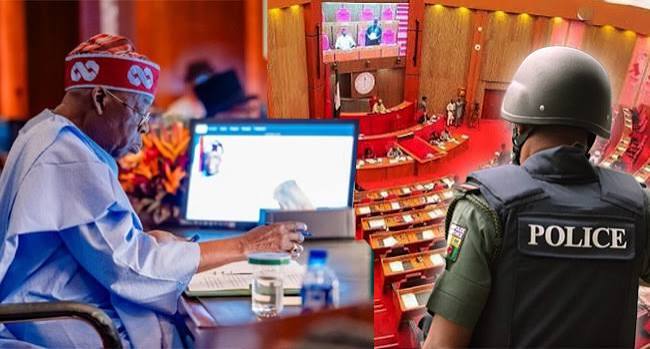
Nigeria’s political and economic landscape is dominated by developments surrounding the proposed establishment of state police, President Bola Tinubu’s directive to security agencies on the rescue of kidnapped victims, and the disagreement between the Federal Government and organised labour over negotiations for a new national minimum wage.
Meanwhile, the latest figures released by the National Bureau of Statistics indicate that the country’s headline inflation rate declined in September 2026, although rising energy costs continue to put pressure on households and businesses.
1. State Police Bill Faces Delay as Only Five Assemblies Approve Proposal
The proposed constitutional amendment to establish state police has encountered delays, with only five of Nigeria’s 36 State Houses of Assembly approving the bill as of Thursday, October 15.
The assemblies of Edo, Osun, Oyo, Rivers and Zamfara have endorsed the proposed amendment, which seeks to decentralise the country’s policing structure and provide a constitutional framework for the creation and operation of state police services.
The slow pace of approval has raised concerns about the progress of the proposal, particularly as the National Assembly had given state legislatures a 30-day deadline to communicate their positions.
2. Tinubu Directs Security Agencies to Rescue Kidnap Victims
President Bola Tinubu has instructed security agencies to intensify efforts to rescue all abducted persons across Nigeria and dismantle terrorist and bandit camps throughout the country.
The directive was disclosed by the Minister of Defence, Christopher Musa, a retired general, on Thursday.
The President’s order underscores the Federal Government’s stated commitment to addressing insecurity, combating terrorism and improving public safety ahead of the 2027 general elections.
3. Federal Government and NLC Disagree Over Minimum Wage Negotiations
The Federal Government and the Nigeria Labour Congress have disagreed over when discussions on a new national minimum wage should begin.
The dispute followed an exchange of correspondence between the Minister of Labour and Employment, Muhammad Dingyadi, and NLC President Joe Ajaero regarding the review of the ₦70,000 minimum wage introduced in July 2024.
While the Federal Government maintains that the next review should follow the statutory timetable, organised labour insists that preparations for fresh negotiations should begin immediately.
The disagreement highlights continuing tensions over workers’ welfare, the rising cost of living and the need for improved wages amid prevailing economic challenges.
4. Nigeria’s Inflation Falls to 14.63 Per Cent
Nigeria’s headline inflation rate declined to 14.63 per cent in September 2026, compared with 15.39 per cent in August, according to the latest report from the National Bureau of Statistics.
The reduction represents a decline of 0.76 percentage points and marks the lowest year-on-year inflation rate recorded in 2026, according to the report.
Lower food prices contributed to the moderation in overall inflation. However, energy costs increased by 5.38 per cent during the month, while core inflation also accelerated.
The figures indicate that although the general rate of price increases has slowed, pressure from specific cost components continues to affect households and businesses.
Overall, the latest developments highlight key national concerns, including security, constitutional reform, workers’ welfare and economic stability as Nigeria approaches the 2027 general elections.