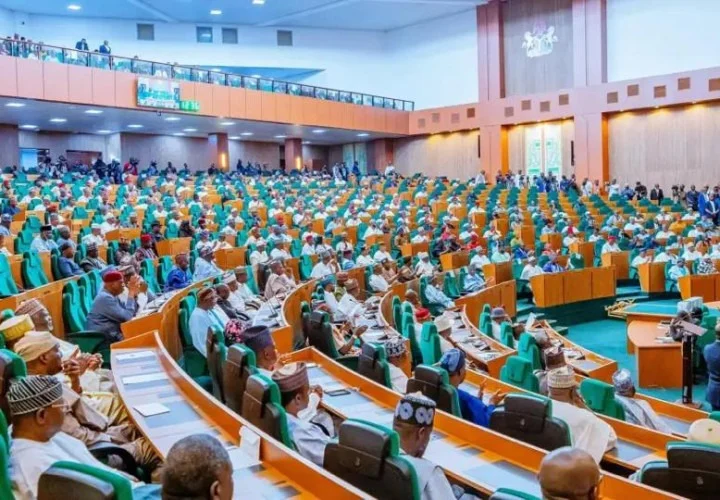
The Minority Leader of the House of Representatives, Fred Agbedi, has criticised Deputy Speaker Benjamin Kalu over his decision to invite the House Leader, Julius Ihonvbere, to address lawmakers on a proposed one-year tuition fee waiver for students in federal tertiary institutions.
Agbedi argued that Kalu’s action violated the House’s rules of procedure, insisting that the matter should not have been reopened for discussion after the motion had been stepped down.
The disagreement occurred during Thursday’s plenary after the sponsor of the proposal, Ahmed Satomi, a member representing Borno State on the platform of the All Progressives Congress, withdrew the motion from immediate consideration following consultations with Ihonvbere.
Satomi had proposed a one-year emergency waiver of tuition fees for students attending federal universities, polytechnics, colleges of education and other federal tertiary institutions.
However, after the motion was stepped down, Kalu invited Ihonvbere to brief lawmakers on the operations and achievements of the Nigerian Education Loan Fund (NELFUND).
The decision prompted Agbedi to raise an objection, citing Order 8, Statute 1, which deals with the arrangement of business in the House.
The minority leader maintained that once the motion had been stepped down, it was no longer before the House for further debate and that the Deputy Speaker had no procedural basis for inviting the House Leader to speak on it.
Agbedi also questioned the need for a general tuition fee waiver, arguing that the existing NELFUND law already provided a framework for supporting students who require financial assistance to pursue higher education.
He maintained that introducing a motion seeking government payment of tuition fees for all Nigerians would raise questions about the existing legislation governing student loans.
According to him, the House should focus on implementing the law already passed to provide financial assistance to eligible students rather than taking steps that could conflict with its provisions.
Agbedi further described Kalu’s decision to invite Ihonvbere after the motion had been stepped down as an irregularity under the House’s rules.
Kalu rejected the objection and ruled the minority leader out of order, maintaining his decision to allow the House Leader to address lawmakers.
During his briefing, Ihonvbere disclosed that NELFUND had disbursed ₦372.6 billion to students and tertiary institutions as of September 29, 2026.
He said ₦192.9 billion had been paid directly to tertiary institutions to cover tuition fees, while ₦79.7 billion had been provided to students as monthly upkeep allowances.
The House Leader also revealed that the fund had received more than 2.3 million applications, with 319 institutions covered under the scheme and approximately 1.66 million students benefiting.
He urged lawmakers to inform their constituents about the programme and encourage eligible students to apply, noting that the application process could be completed online without personal connections or visits to government offices.
Why the tuition waiver was proposed
Satomi’s proposal was introduced against the backdrop of rising living costs, which have increased the financial pressure on Nigerian households.
The lawmaker argued that higher expenses for food, transportation, accommodation, electricity and other essential needs had made it increasingly difficult for parents and guardians to meet the cost of their children’s education.
He warned that students in universities, polytechnics and colleges of education could be forced to abandon their studies, defer their programmes or endure prolonged financial hardship if urgent support was not provided.
The motion also raised concerns that financial barriers to higher education could worsen youth unemployment, deepen inequality and contribute to social instability.
Satomi therefore called for a temporary government intervention to ease the burden on students while the country continues to implement its economic reforms.
The proposal also emphasised that any relief programme should be time-bound, periodically reviewed and adequately funded without undermining the quality or sustainability of tertiary education.
The motion was ultimately stepped down for further consultation, leaving the proposed one-year tuition waiver without immediate approval.
The disagreement between Agbedi and Kalu highlights continuing legislative discussions over how best to support Nigerian students amid rising education costs, with lawmakers divided over the proposed waiver and the role of the existing student loan scheme.
#HouseOfRepresentatives #BenjaminKalu #FredAgbedi #NELFUND #TuitionFees #NigerianStudents #EducationNews #NigeriaNews #TrendsReporters