














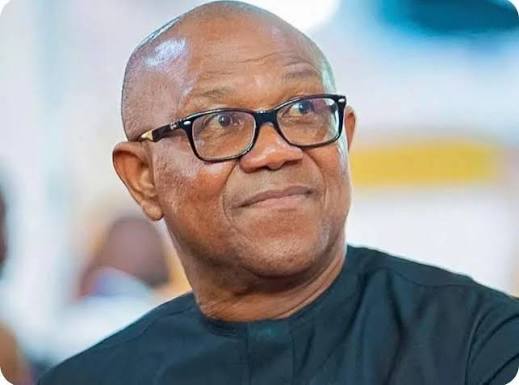
The Presidency has challenged former Anambra State Governor and Nigeria Democratic Congress presidential candidate, Peter Obi, to honour his pledge to withdraw from the 2027 presidential race if evidence shows that his administration left outstanding financial obligations in the state.
The challenge followed fresh claims by the Anambra State Government that Obi left behind outstanding loans, salary arrears, pensions and gratuities when he handed over power in March 2014.
Special Adviser to President Bola Tinubu on Information and Strategy, Bayo Onanuga, raised the issue in a post on X, referring to Obi’s earlier statement that he would stop campaigning if it was established that he left debts or unpaid obligations behind.
The controversy began after Obi rejected claims that his administration left Anambra with outstanding liabilities. He said he had settled all salaries, pensions, gratuities and verified obligations owed to contractors and suppliers before leaving office.
Obi also maintained that about N2.1 billion was left in a First Bank account for an erosion-control project. He challenged the state government to produce evidence showing otherwise, saying he would stop campaigning if his account of the funds was disproved.
Anambra government presents its account
However, Anambra Commissioner for Information and Value Reorientation, Law Mefor, disputed Obi’s claims.
Mefor said records from the Debt Management Office showed that eight external loans contracted during Obi’s administration remained outstanding.
According to the state government, the balance of those loans stood at approximately N127.4 billion as of June 30, 2026, based on the official exchange rate. The loans were reportedly obtained for projects covering areas such as healthcare, malaria control, education, erosion management, community development and agriculture.
The government also alleged that outstanding salary, pension and gratuity obligations remained after Obi left office.
Mefor further challenged Obi’s account of the N2.1 billion ecological fund, saying the First Bank account referenced by the former governor was actually an Internally Generated Revenue Consolidated Revenue Account.
He said a certified statement of the account obtained by the state government did not show the amount Obi claimed was available for the erosion-control project.
Dispute centres on definition of liabilities
The disagreement has largely centred on what constituted outstanding liabilities at the point Obi handed over power.
While Obi has maintained that he settled obligations that were due and properly processed before leaving office, the Anambra government has pointed to loan balances and other liabilities that it says were inherited by subsequent administrations.
The state government has also said that the existence of debt does not necessarily mean borrowing was improper, arguing that some of the loans were tied to development projects.
According to the government’s figures, the current administration continues to service some of the outstanding obligations attributed to previous administrations.
The Presidency’s intervention has now brought the dispute into the wider political conversation ahead of the 2027 presidential election.
Onanuga asked whether Obi would follow through on his earlier pledge should the claims against his administration be established.
The former governor has yet to publicly indicate whether the latest documents and figures released by the Anambra government have altered his position.
The controversy is expected to continue as both sides present competing accounts of the state’s financial position at the end of Obi’s tenure.