













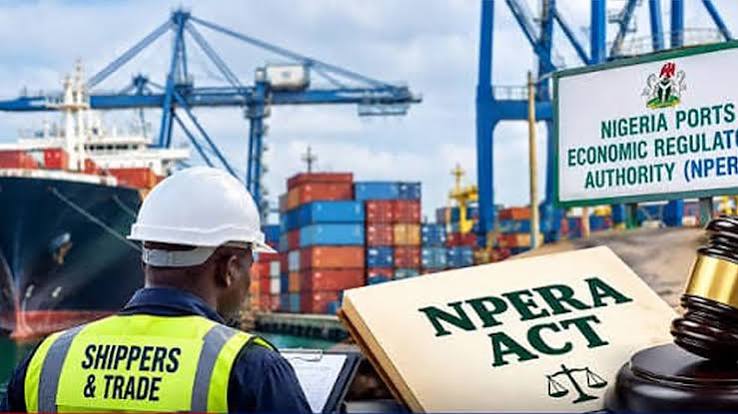
The Nigerian Ports Economic Regulatory Agency has introduced tougher sanctions for companies that violate regulations at the nation’s seaports, with offending corporations liable to fines of up to N20 million.
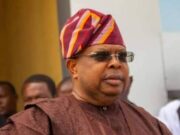
The agency’s Director-General, Dr Pius Akutah, disclosed this as NPERA commenced operations as Nigeria’s dedicated economic regulator for the ports.
Akutah explained that the new regulatory framework provides stronger enforcement powers than the previous arrangement under the Nigerian Shippers’ Council.
Under the new system, an individual committing an offence for the first time could face a minimum penalty of N500,000, while sanctions may increase for repeated violations. For companies, the maximum fine is N20 million, with the agency authorized to increase the penalty where an organization continues to breach the law.
According to the NPERA boss, some serious violations could also lead to criminal prosecution under provisions contained in the NPERA Act 2026.
He said the objective of the tougher penalties was not to disrupt port operations but to create a regulatory environment that encourages compliance and discourages practices capable of undermining efficiency in the maritime sector.
Akutah said the agency would apply the law impartially to both service providers and users of port facilities.
Focus on efficient ports
The NPERA chief said the agency would combine enforcement with standard-setting, automation and digitization to improve the efficiency of Nigerian ports.
He explained that reducing human interference in port processes would help minimize delays, lower costs and make compliance with regulations easier for operators.
Akutah also linked the agency’s mandate to the Federal Government’s ambition of building a $1 trillion economy by 2030, noting that efficient ports would be important to expanding trade and business activity.
He stressed that the focus should not be limited to the revenue generated by government but should also include the volume of economic activity and businesses that the port system enables.
NPERA, NPA roles clarified
Akutah also addressed concerns about possible clashes between NPERA and the Nigerian Ports Authority.
He explained that the two agencies have different responsibilities, with the NPA responsible for port infrastructure development while NPERA focuses on economic regulation.
He said the new framework was designed to provide a clear regulatory structure while ensuring that government agencies continued to perform their respective statutory functions.
NPERA has also said it will strengthen alternative dispute resolution mechanisms to reduce the time and cost involved in resolving maritime disputes.
The agency’s commencement of operations followed President Bola Tinubu’s assent to the Nigeria Ports Economic Regulatory Agency Bill, 2026, which established NPERA as the statutory economic regulator for Nigeria’s ports.
Akutah said the agency would continue working with stakeholders to establish a more predictable and competitive port environment capable of supporting Nigeria’s trade and wider economic growth.